After 91-year-old Margaret Keenan, the first person in the UK to receive the Pfizer vaccine , 82-year-old Brian Pinker is the first Briton to receive the Oxford vaccine – at Churchill Hospital in Oxford.
Britain thus became the first country in the world to start administering this vaccine, which is cheaper and stored at more suitable temperatures than the American Pfizer vaccine.
In days when the United Kingdom is seeing an increase in the number of infections, especially with the new strain of coronavirus , and Prime Minister Boris Johnson is announcing the introduction of stricter measures, the start of the Oxford vaccine is also considered the light at the end of the tunnel.
More than half a million doses of the Oxford vaccine are ready for use.
Matt Hancock, the British health secretary, said this was a “crucial moment” in Britain’s fight against the coronavirus.
He stated that he expects mass vaccination to help flatten the infection curve and then gradually ease restrictive measures.
But Prime Minister Boris Johnson said on Sunday that stricter measures would likely be introduced in regions as Britain struggles to contain the spread of a new strain of the virus.
On Sunday, Britain recorded more than 50,000 new cases of coronavirus for the sixth day in a row.
The opposition Labour Party therefore called for the introduction of a complete ban on movement and quarantine in England.
These measures are already in place in Northern Ireland and Wales, while the Scottish government has yet to make a decision.
Vaccination begins at a time when a debate has flared up in the British public about whether it is wise for students to go back to school.
Mass immunization with the Oxford vaccine began on Monday at six hospital centers in Oxford, London, Sussex, Lancashire and Warwickshire.
Some of the vaccines will be distributed to nursing homes across Britain later this week, the Department of Health announced.
Brian Pynker, who has been coming to Churchill Hospital for dialysis for years due to kidney problems, said he was very proud that the vaccine was developed in Oxford.
“The nurses, doctors and other staff were great today and I’m really looking forward to celebrating our 48th wedding anniversary with my wife Shirley later this year,” Peinker said.
Music teacher and father of three, 88-year-old Trevor Cowlett, and Professor Andrew Pollard, a paediatrician working at Oxford University Hospitals NHS Foundation Trust , were also among the first to be vaccinated.
 Chief nurse Sam Foster told the BBC it was a “huge privilege”.
“Each patient we have vaccinated has a different story, but this morning is no different.”
British Health Secretary Matt Hancock told the BBC’s Morning Programme that the approval of the Oxford vaccine was a “pivotal moment” in the fight against coronavirus.
“It will be difficult for the next few weeks, but this is the way out,” he said.
He also added that a large amount of bureaucracy related to vaccines will be reduced to speed up the administration process.
“For example, there is one of the training programs on how to fight terrorism, I don’t think it is necessary, we will stop it,” he said.
As the recent surge in Covid cases puts increased pressure on the healthcare system, Britain has accelerated the vaccination process.
Both doses will be given 12 weeks apart, as it was originally planned to leave 21 days between immunizations.
The UK’s chief medical officer has defended delaying the second dose, saying immunising more people with the first dose is “much more desirable”.
“The largest vaccination programme in the history of the British health service has started strongly, thanks to the enormous efforts of staff who have already given more than a million injections,” said NHS medical director Professor Stephen Powis.
He added that the approval of the Oxford vaccine “has created another world that will protect thousands in the coming weeks.”
The Pfizer-Biontec vaccine was the first to be approved in the UK, and more than a million people have already received their first dose.
The first person to be vaccinated on December 8, Margaret Keenan, has already received her second dose.
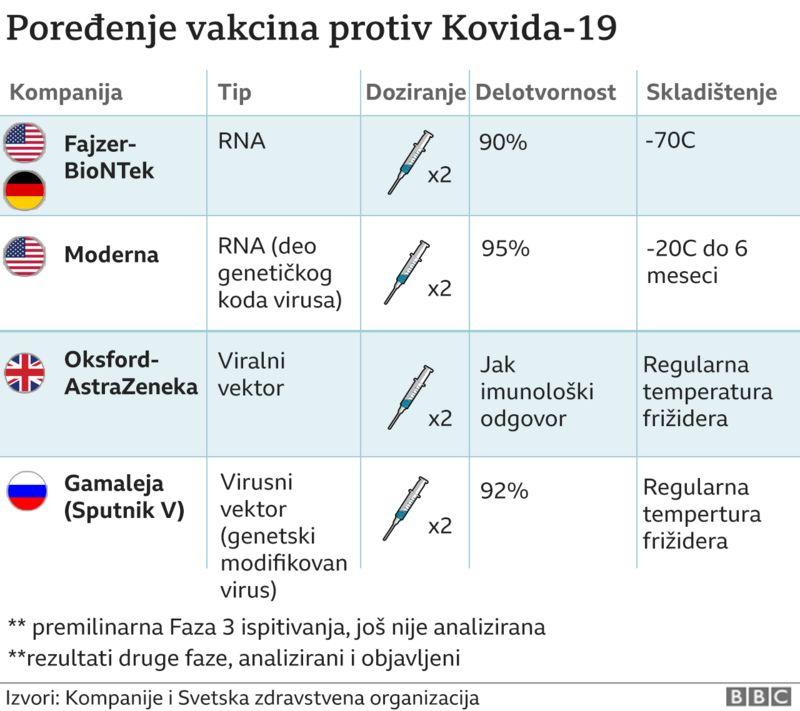
The Oxford vaccine – which was approved for use in late December – can be stored at normal refrigerator temperatures, making it easier to distribute and store than Pfizer’s.
It’s also cheaper.
The UK has secured 100 million doses of the Oxford-AstraZeneca vaccine, enough for most of the population.
Nursing home residents and staff, people over 80 years of age, and healthcare workers are the first to receive this vaccine.
Source: BBC