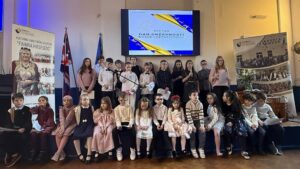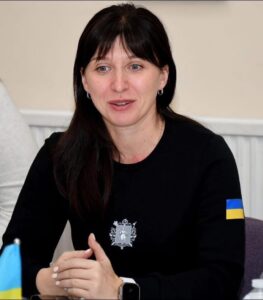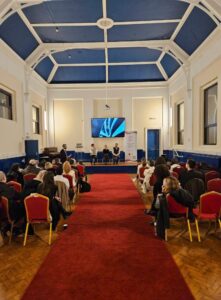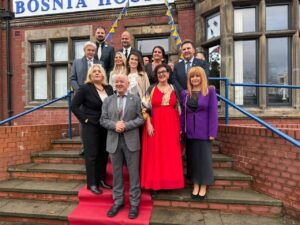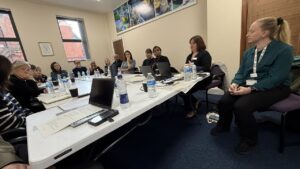
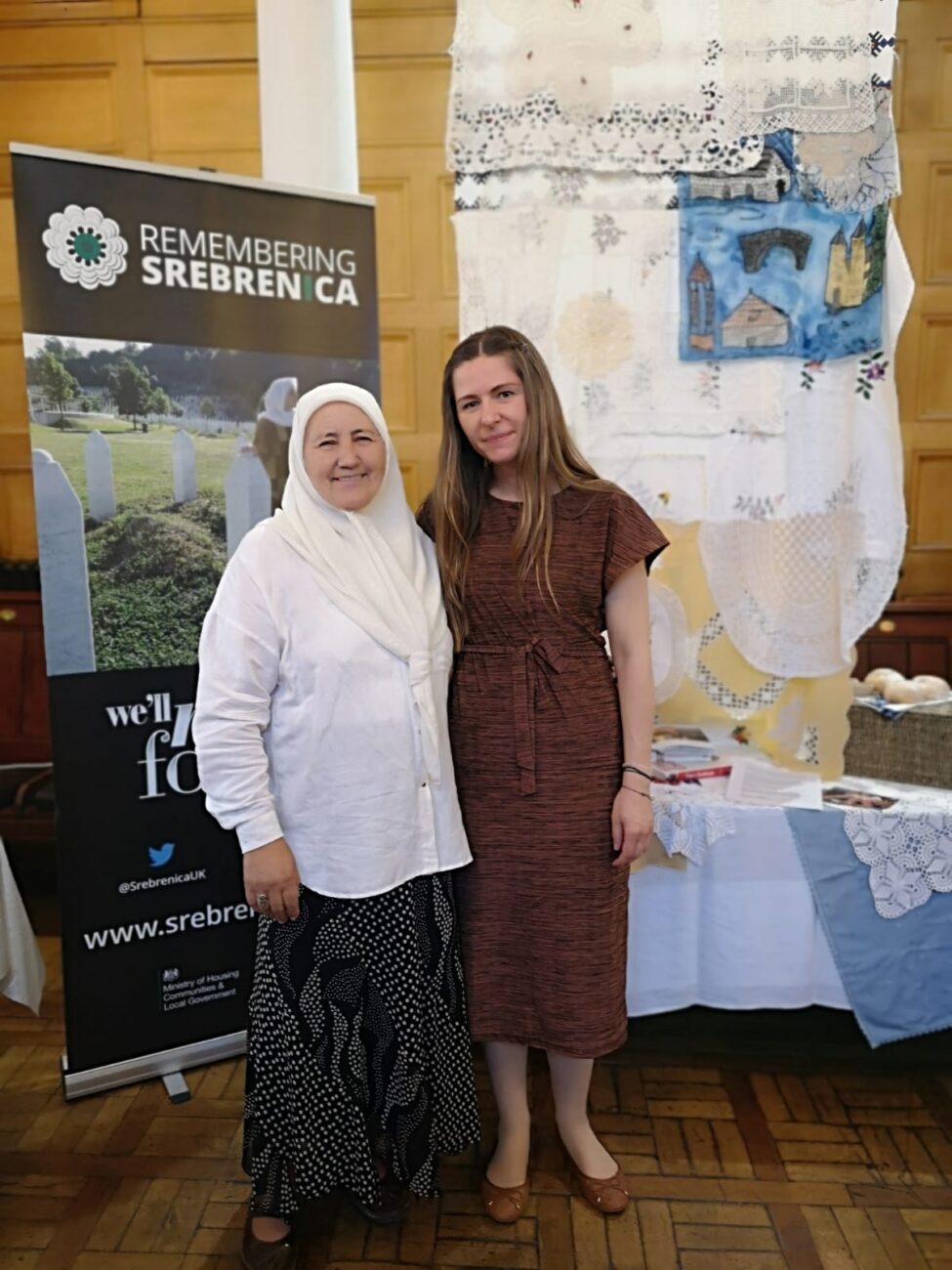

As part of the Srebrenica Remembrance Week, the Jewish Community Synagogue in West London commemorated the largest genocide committed in Europe since World War II with a special program and prayer. The guest of honor, without whom this event would not have been complete, was Fadila Efendić, who thanked the attendees for their sympathy and told her tragic story with the message that the Srebrenica genocide should never happen to anyone again. Fadila is a mother from Srebrenica, she lost her husband and only son in the Srebrenica genocide. Her husband was buried in 2003, but his skull was found in another mass grave two years later. As for her son Fejz, only two of his bones were found. Despite the pain and trauma of her horrific experiences, Fadila returned to Srebrenica to rebuild her house, which was destroyed by Serbian forces; all that remains is her son’s diploma. She uses her pain as a driving force to seek justice, not only for herself, but for all victims of the genocide.
The President of the Bosnia UK Network, Zaim Pašić , also attended, emphasizing how important it is to talk about the genocide to other ethnic and religious communities, not only in the UK but also around the world. “By coming, the attendees expressed their sympathy and desire to learn more about the genocide that occurred against Bosniaks in Srebrenica. Listening to the Mother of Srebrenica, praying and observing the Tito’s Picnic exhibition, I realized that our best “revenge” is our knowledge, that these are our children who are getting an education, graduating from university and that we do not want to take revenge in any other way,” said Pašić. 
As part of the program, an exhibition by Lejla Kevrić entitled Tito’s Picnic , related to the tradition and culture of Bosnia and Herzegovina, was held . Indeed, the very title and content of the exhibition evoked nostalgia among those present who were once called Yugoslavs. The exhibition aimed to portray hope for a common society.
“Bosnia and Herzegovina suffered a brutal, ethnically rooted war in the 1990s. The Dayton Peace Agreement, intended as a quick fix, divided the country along ethnic lines – Bosniaks, Croats and Serbs, and the segregation is still very evident today. Several trips to Bosnia and Herzegovina revealed modest connections and moments of unity through drinking coffee together, eating bread and celebrating family occasions around the tablecloth. This inspired ‘Tito’s Picnic’,” said Lejla Kevrić. She came to the UK when she was 11. Lejla currently lives in London and recently completed a Master’s degree in Design Expanded Practice at Goldsmiths University.

Tito’s picnic
BREAD:
The humble ingredients and the bread-making process depict shared qualities and a sense of closeness. A Bosniak, a Croat and a Serb simultaneously kneaded the humble dough. The symbolic nature of testing the dough, breathing as one part, created a poetic harmony.
CLAY:
To geographically connect to the core borders of Bosnia and Herzegovina, clay was excavated from three locations, each with a majority Bosniak, Croat or Serb population. The clay was mixed in equal parts and used by the three ethnic groups to simultaneously create unique cups of coffee through an organic dialogue.
THE EFFECT OF A PICNIC BLANKET:
The ritual of lowering the tablecloth or blanket signifies the feeling of an event, a temporary occupation of space. This caused an investigation into the use of tablecloths as an active tool and prompted a search for donations from Bosniaks, Croats and Serbs, as well as directly purchased tablecloths from three entity cities in Bosnia and Herzegovina. The detached and uneven edges of the centralized “cover” symbolize open borders inviting Bosniaks, Croats and Serbs to bring their own tablecloths and join “Tito’s Picnic”. The symbolism and nature of ordinary people laying out their tablecloths or blankets is an opportunity to demonstrate a sense of action beyond the realm of political and ethnic divisions.