The Bosnian diaspora is well integrated in many countries, and enthusiasts are trying to connect new generations with their homeland through learning the Bosnian language in supplementary schools.
One way to preserve the Bosnian language in the Bosnian diaspora is through supplementary schools, which are organized in various ways according to local legislation and community capacities. On the occasion of February 21, International Mother Language Day, people who organize Bosnian language classes from Denmark, Great Britain and Qatar spoke to Anadolu Agency (AA) and shared their experiences and good practices.
– Positive examples from Scandinavia –
The Bosnian diaspora is numerous in the Scandinavian countries and is one of the best integrated communities. There are numerous examples of successful individuals from culture to politics who represent their homeland in the best way.
Jasna Hasanbašić is one of the key people for the preservation of the Bosnian language in Denmark, who, among other things, organizes seminars for teachers in the diaspora and runs the Facebook group Keepers of the Bosnian Language in Denmark.
“It is estimated that around 28,000 citizens of Bosnian origin live in Denmark. The largest number of them came in refugee waves during the 1990s, and the first immigrants were workers during the 1970s. Recent research has shown that young people from Bosnia and Herzegovina are, in percentage terms, one of the most educated minority communities, as well as the most integrated immigrants in Denmark,” Hasanbašić, president of the Board of Bosnian and Herzegovina Teachers in Denmark, tells AA.
A large number of young people of BiH origin have university degrees and occupy significant and important positions in Danish society.
“Our children are doing well in Danish society, but it is also necessary for these children to learn and know the Bosnian language, customs and culture of Bosnia and Herzegovina. Unfortunately, there are more and more children and younger people who do not know or communicate very poorly in the Bosnian language,” adds Hasanbašić.
 Teaching in the Bosnian language began in refugee camps, and continued through schools, centers, associations, congregations…
“At the very beginning, while we were still living in refugee centers, Bosnian language classes were organized by the Danish Red Cross. The teachers were trained educators or those who had similar education in Bosnia and Herzegovina. From 1993 to 1995, 53 primary schools and 12 high schools were established in the Bosnian language. After leaving the refugee centers, Bosnian language classes were organized at the state level in Danish schools, until 2000, when, due to intensive integration into Danish society, interest in attending classes decreased. The Danish Parliament then stopped funding and handed everything over to the municipalities. Later, the communes, due to savings, suspended Bosnian language classes in Danish schools,” explains Hasanbašić.
Unfortunately, the interest of BiH Diaspora for the Bosnian language has been on the decline in recent years.
“The situation today, unfortunately, is such that there is a divided opinion among parents about the importance of using the Bosnian language. A large part of the older generation, as well as a part of the middle and younger generations, communicate in their native language, instilling in their children a love for their homeland, while a large part of the younger generation uses the Bosnian language in mutual communication less and less, or not at all,” adds Hasanbašić.
In some associations and congregations, supplementary schools with limited capacities are organized where there is a lack of qualified workforce, space and equipment.
“Until 2019, there were seven supplementary schools with around 160 students, two schools are closing at the end of 2019. One due to a lack of children or lack of interest from parents, the other due to a lack of staff. Adequate teachers are very difficult to find. Most of those who work with children are volunteers who do not have the education to work with children in the classroom. However, there were persistent enthusiasts who undertook various activities to enable children to learn the Bosnian language,” concludes Jasna Hasanbašić.
 – Three decades of teaching in the Bosnian language in Britain –
Although the Bosnian community in Great Britain is small, it is very well organized, and the annual gatherings of students and teachers in supplementary schools are the most numerous gatherings.
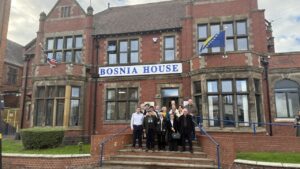
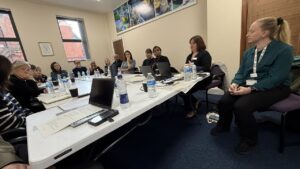
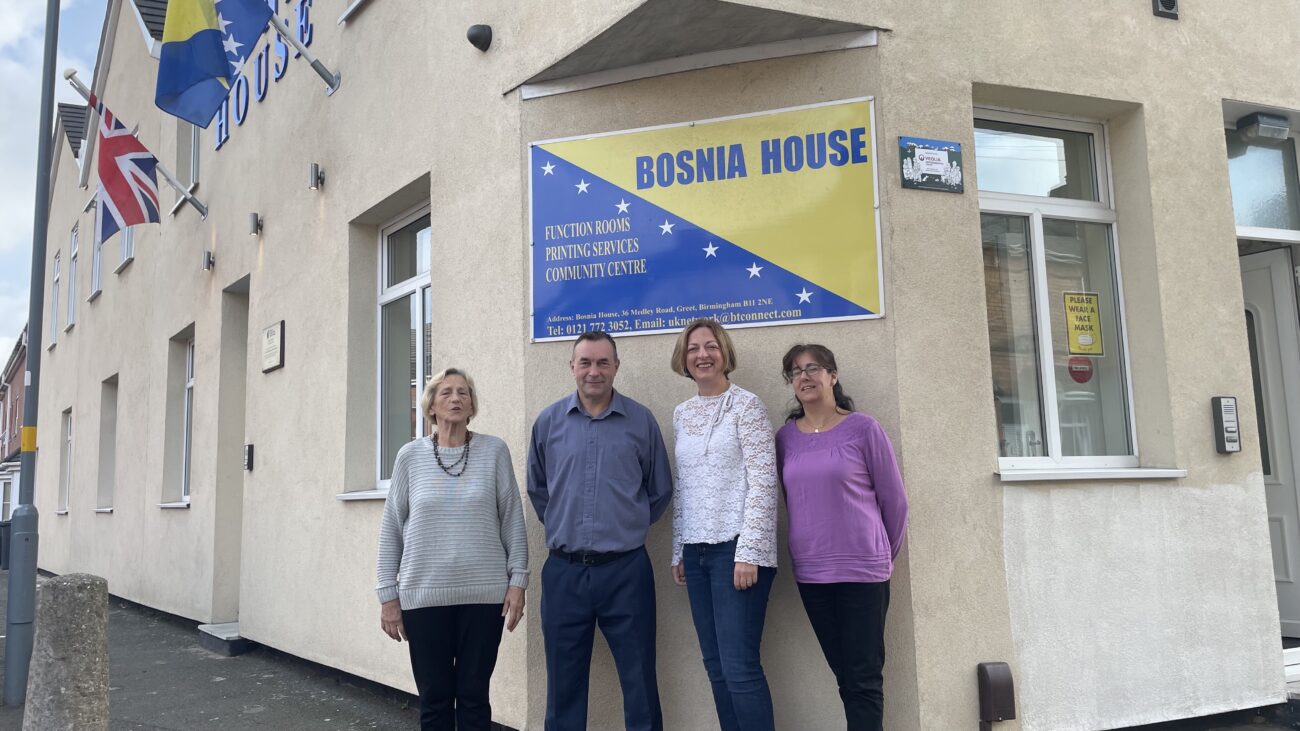
“In Great Britain, around 10,000 BiH citizens found their new home. Upon arriving on the Island, many families and friends found themselves far apart from each other. Soon after, self-organization and the establishment of associations followed. Out of the everyday desire to socialize more, a unanimous decision was made to form the BH UK Network in 1996 as an umbrella organization for Bosnian and Herzegovina associations in Great Britain, headquartered in Birmingham,” Anes Cerić from Bosnia and Herzegovina UK Network tells AA.
Due to the need to preserve the mother tongue, culture and tradition, BiH supplementary schools have begun to be organized within associations throughout Britain, and their work is coordinated by the BH UK Network.
“The first BiH supplementary schools were organized in the 1990s. In recent years, they have managed to save many of our children from forgetting their native language and have enabled them to speak with their relatives and friends during the holidays in a language they understand, and not as foreigners,” Cerić points out.
Initially, interest in supplementary schools was great when they operated in eleven English cities, and today there are six of them (London, Hertfordshire, Derby, Coventry, Birmingham and Manchester).
 “With the acquisition of British citizenship, but also a lack of finances, interest in supplementary schools is also declining. Attending school is not only about literacy, it is also a social factor because it helps a child get to know their peers and have an awareness of belonging to a community. By the time they start attending supplementary education, all children are already regular students in English schools. Most of them have already mastered the English alphabet, and they still need to learn the alphabet in supplementary school,” explains Cerić.
Supplementary classes are held weekly and are optional.
“The primary role of supplementary schools is for children to learn to write and read in their native language, and after that foundation, children expand their knowledge about our writers, works, history and geography of Bosnia and Herzegovina. Many students encounter difficulties when writing and pronouncing letters that do not exist in the English language. Unfortunately, many students experience difficulties in mastering our cases, verb tenses, grammatical genders and numbers, and the correct use of prepositions,” adds Cerić.
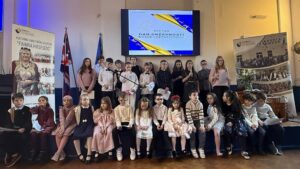
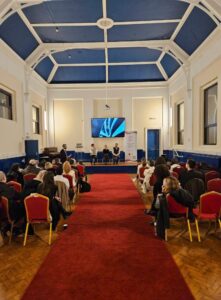
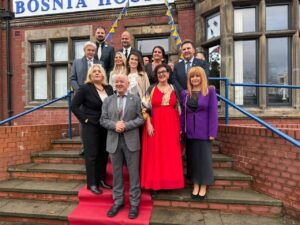
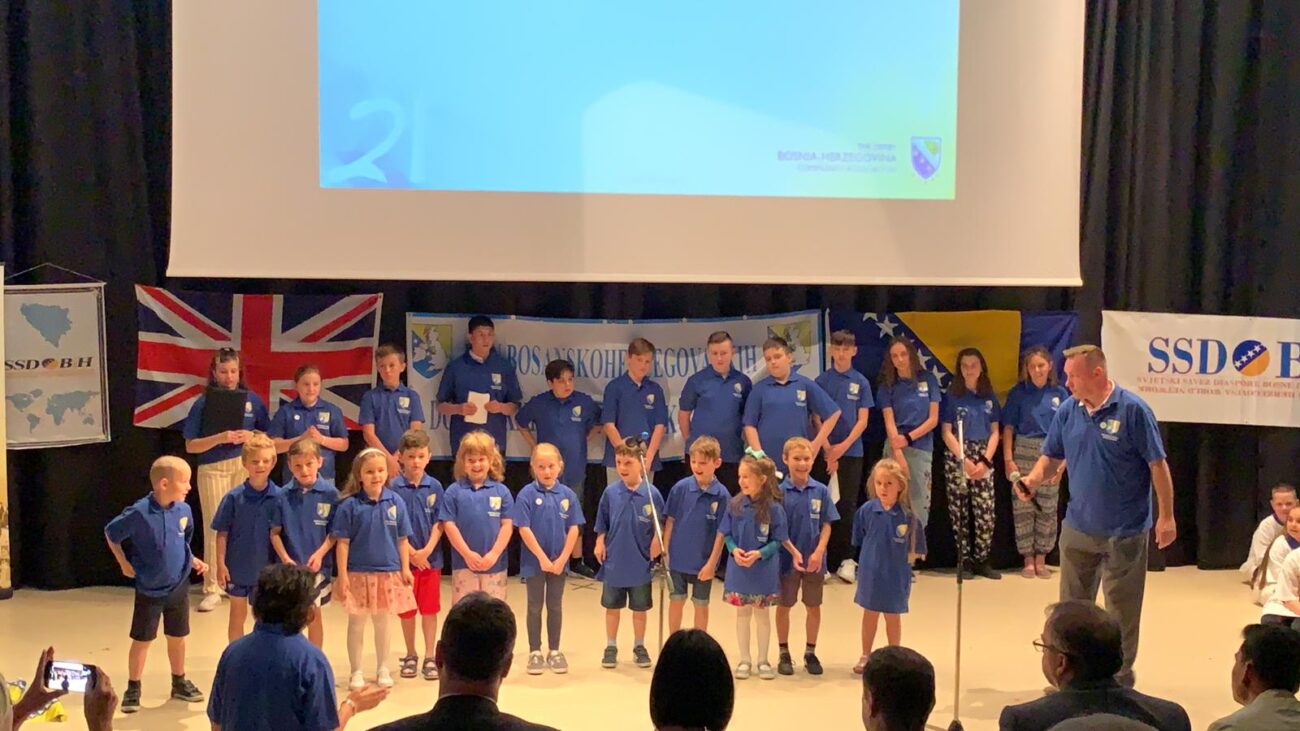
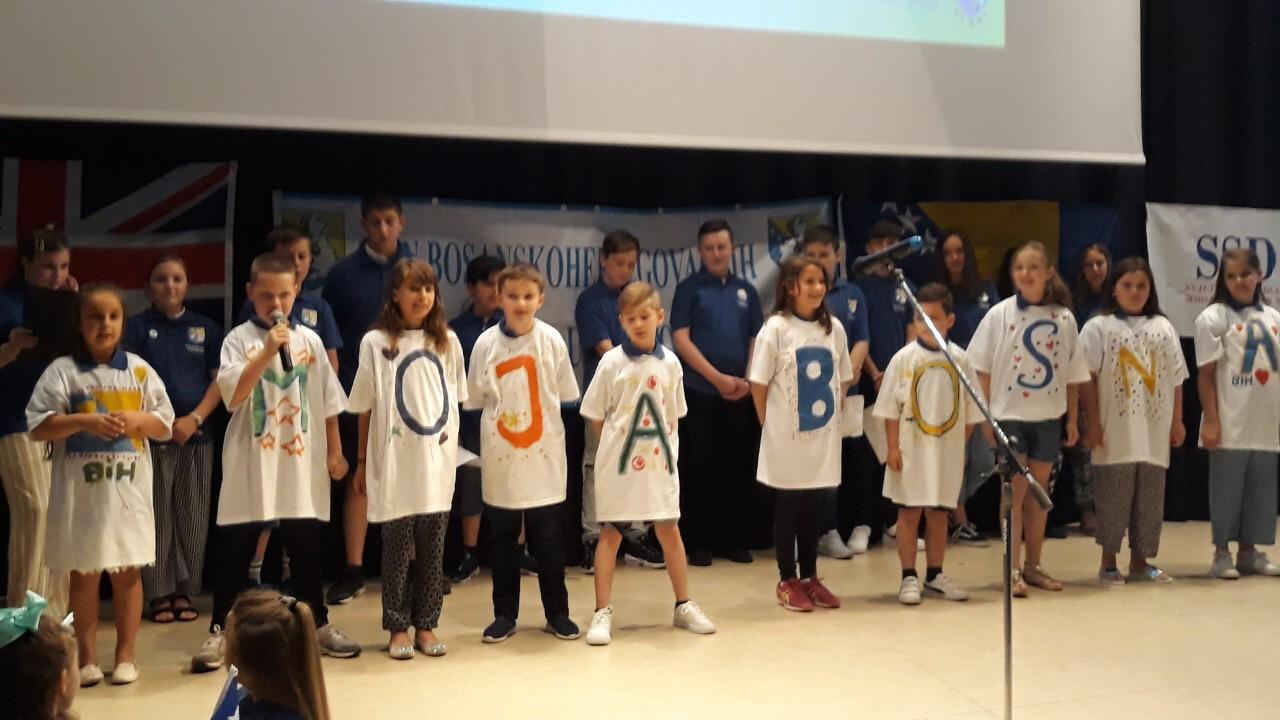
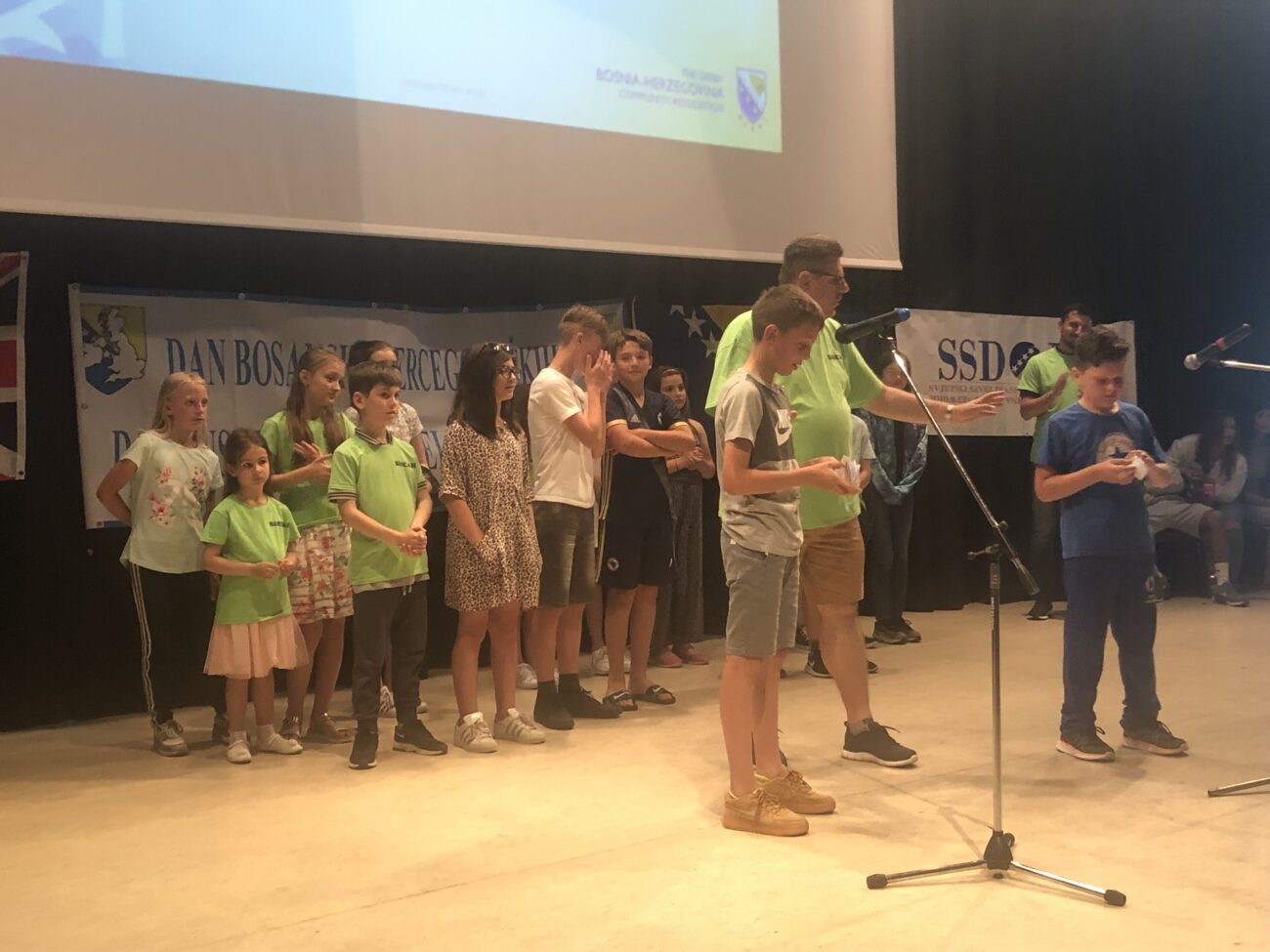
One of the traditional annual activities organized by the BH UK Network is a gathering of Bosnian and Herzegovina supplementary schools in the United Kingdom.
“This gathering has been growing larger over the years, and is probably the largest gathering of Bosnians and Herzegovinians living on the Island, for whom this is a unique opportunity to see and refresh old memories and make new friends. Through the rich cultural and entertainment program, their effort and desire to learn to pronounce the Bosnian language as well as possible and present what they have learned is visible. Watching them year after year, listening to them recite and sing our songs and speak our language, we conclude that the effort is not in vain. We can certainly say that supplementary schools are the pillar of various activities and no celebration of national holidays and other events can go without the participation of our students and teachers,” said Cerić.
Regular school activities include the celebration of the Statehood and Independence Day of BiH and activities related to the Srebrenica Genocide and the Holocaust.
“BH UK Network has been appealing to the competent Bosnian and Herzegovina institutions for years for assistance in organizing supplementary schools and implementing Article 33 of the Law on Primary and Secondary Education. Unfortunately, in many cases, there are no responses to the requests of BiH supplementary schools, and even the responses they have received are negative,” concludes Cerić.
 – Bosnian language is also taught in Qatar –
The Bosnian supplementary school in the capital of Qatar is the youngest and the only one in Asia. The school in Doha was launched in January 2021, and its initiators are Tahira Khan Ališić and Haris Ališić.
“School is free, which means a lot in Qatar, given the high standard and the fact that everything is paid for. For years, the mekteb was the only place where children used exclusively the Bosnian language. Unfortunately, most young people mix Bosnian and English in everyday communication. Due to the pandemic, regular classes were interrupted and children began to use English more and more. In order not to lose their native language, a supplementary school was launched,” says Tahira Khan Ališić.
The goal of the school is for the children to gain knowledge about their homeland and to preserve the Bosnian language.
 “Currently, classes are online, twice a month. There were also classes outside, in nature, but due to the pandemic, we were forced to start online classes again. At the beginning, 35 children aged 6 to 16 were enrolled. The children were divided into several classes, and the teachers are Emina Turalić, Fatima Marić, Belma Jusić, Nasiha Šuvalić-Džakmić, Džena Berbić, Jasmina Muratović, Abdullah Buljubašić, Senad Borovac and Eldar Hodžić. Everyone works as a volunteer, dedicating their free time to preserving the language and identity of our children in Qatar,” Ališić points out.
Support for this group of volunteers was provided by Haris Halilović from the Association of Supplementary Schools in Germany, and cooperation with supplementary schools in Scandinavia has also been successful.
“There are many children who are not yet enrolled in school, and those who are have difficulty learning the material, because the textbooks published in Bosnia are unfortunately inadequate for children born in the diaspora. We are eagerly awaiting the textbooks from Professor Azra Kadić-Hodžić from Austria, who, together with a team of teachers from the diaspora, is preparing new textbooks. The Bosnian supplementary school is a very important project for our community, because it preserves the connection between Bosnia and our children,” concludes Ališić.
Supplementary schools in the Bosnian language also operate in America and Australia.
Sanadin Voloder/AA