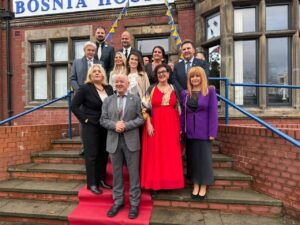
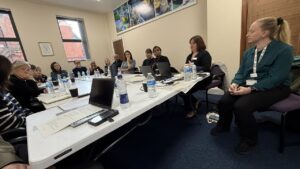
Last month, British King Charles III awarded the OBE (Order of the British Empire) to Smaja Bešo, a native of Stoć who lives and works in England. Bešo was included in the New Year’s Honours list for his work in education about genocide and the Holocaust.
During the aggression against Bosnia and Herzegovina, Smajo Bešo fled with his family to Great Britain, where he was educated and is today a professor at Newcastle University in England, who is also dedicated to conveying the truth about the aggression and lobbying for Bosnia and Herzegovina.
On the occasion of this great recognition, we spoke with Beša about this recognition, his journey, work, results, goals, but also about the situation in BiH, which he still considers his home, even though his address is miles away.
VIJESTI.BA: What was Smajo Bešo’s first thought when he received an invitation to Buckingham Palace and a meeting with the king? How important is this recognition and how much does it mean to you?
BEŠO : When I first received the email, I thought it was a scam and completely ignored it. It wasn’t until later, while going through my emails, that I saw it again, so I paid attention to it and realized that I had until the next day to respond. All recipients had to agree to a non-disclosure agreement until the official statements were made. It wasn’t until my family found out, when Bosnian and British media started contacting me, that the enormity of the moment finally began to sink in.
Father in the camp, murdered aunt, hunger, shelling…
In those moments, my mind began to wander, I began to think about all the difficult times in Bosnia, about the suffering my family endured, about all the loved ones who died, about our journey to Great Britain, how far we have come, and it is with this background that I think about this award. I was thinking about the moment when I witnessed my father being taken away by the Croatian fascists on July 1, 1993, how I unknowingly witnessed that moment while playing outside with my friends and we saw the trucks leaving Stolac. I thought about the moment in August 1993 when Croatian soldiers searched my mother in front of me and my brothers and sisters and how we were loaded onto cattle trucks towards Blagaj.
I thought about all the times we were hungry, that horrible and painful hunger deep in our stomachs, I thought about the horrible brown bread we made from chicken feed, I thought about every missile that hit our house (as many as 6 times at one point) and how I thought I was going to die each time.
I thought about January 25, 1994, the moment when my aunt Emina was killed by Croatian fascists. I thought about moving to Great Britain and leaving everyone behind, starting school without knowing a word of English, how far we’ve come I thought, I thought that only in those difficult moments could we know that life would go on, I wondered if that would give us at least a little comfort.
This recognition means a lot, because it is recognition for my fight for justice and truth. For the last 8 years, through my own personal history, my own pain and suffering, I have been educating people here in the UK about the injustice we faced in Bosnia in the 1990s and the injustice we continue to face.
There is so much we can learn from Bosnia, and this recognition is proof that people are finally starting to listen. Now there is a desire to learn about what happened in Bosnia, especially about what peace is.
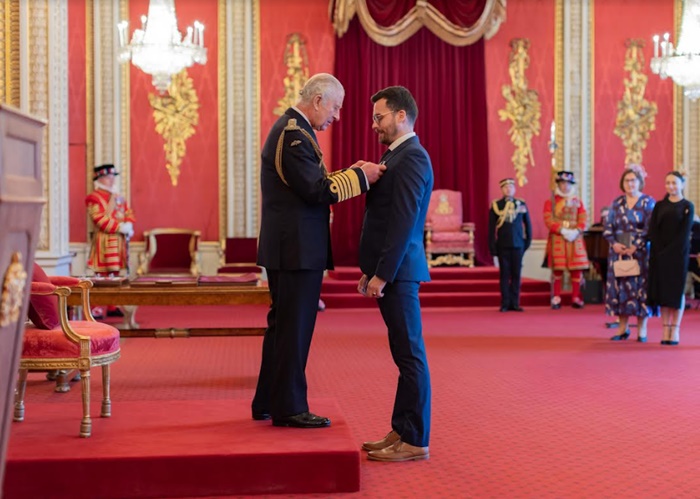
Meeting with the king and awarding of awards
VIJESTI.BA: Will this recognition open up new paths?
BEŠO: In a practical sense, this recognition will now give me more opportunities and open doors to places where I can continue to share her story and educate about Bosnia, because, as we know, Bosnia is once again in a very difficult situation. I have already been invited to events and meetings in the coming weeks that will bring together senior members of the government, and every meeting can make a difference and help keep Bosnia on people’s minds and on the political agenda.
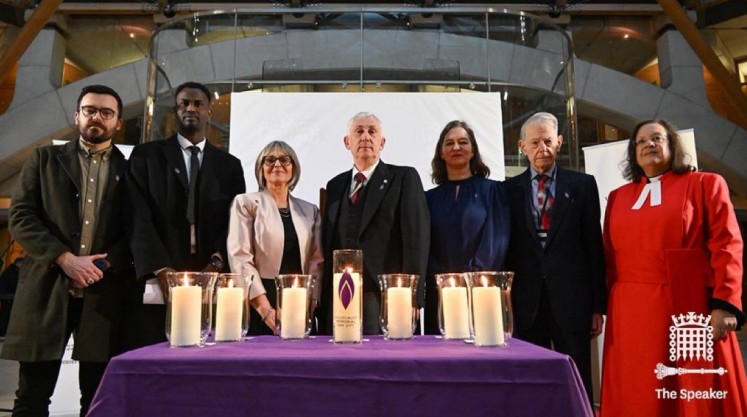
British Parliament, January 2023, with Sir Lindsay Harvey Hoyle in the middle, Speaker of the House of Commons who hosted us at the Speaker’s House
VIJESTI.BA: What was that transition like, from a hungry child from the war to a UK citizen?
BESO: About 7 months after my aunt Emina was killed, when I was 9 years old, I arrived in Great Britain with my family. I was broken, I had experienced more things than most people in a lifetime. It was hard to look beyond the moment we were in, let alone 30 years ahead.
During the war, we were in survival mode, and a big part of that survival was the ability to imagine a better and more attractive future. My mother, my aunt Emina, my grandparents helped us achieve that, we often forget the role of women in war, but they kept us going.
They helped us imagine the future, the one without war, the future in which we could go to school and college. When my aunt was killed, that hope and that future went with her. I think it was only when we arrived in the UK that we began to process what had happened to us, and it was difficult to look beyond that moment. The war was still going on in Bosnia, our relatives were mostly there, we didn’t know how long we would be allowed to stay in Great Britain. We didn’t know what else to expect from life.
If someone had told me that 30 years later we would still be in Great Britain, that I would speak openly and publicly about Bosnia and what we experienced, and that I would appear on national television, in parliament, in schools and elsewhere, I would never have believed them.
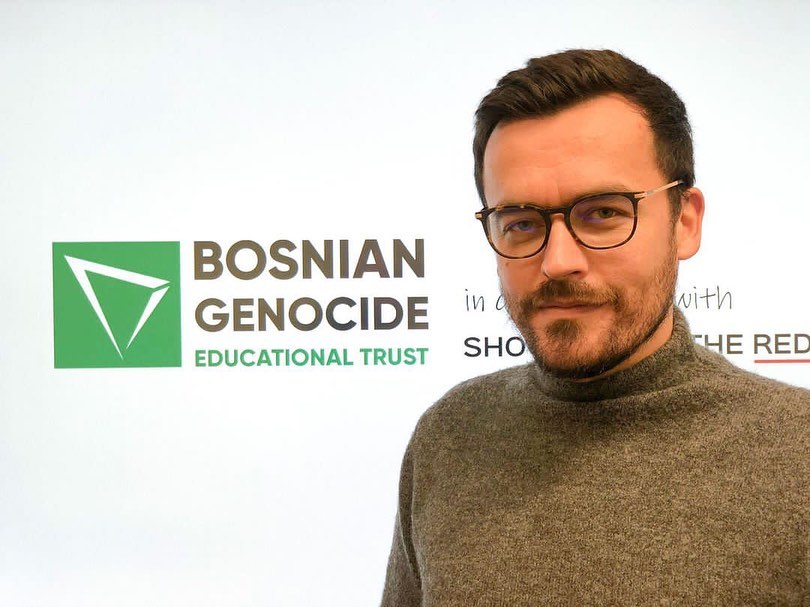
Nightmares, but also the desire to tell the world what happened to us
I missed my family in Bosnia, I wanted to go back, I had terrible nightmares, I woke up screaming every night. But even then, I had a desire to tell the world what happened to us, and now I do.
The vast majority of those who have committed atrocities live among us, people are shocked to hear that. How can you even begin to rebuild your life surrounded by the same people who killed your loved ones, but the Bosnians managed to do it.
VIJESTI.BA: BiH is a lesson, an inspiration…
BEŠO: I started this business as a way to achieve justice for myself and my family. My grandfather and grandmother passed away before the murderers of their daughter were brought to justice, on the evening of January 24, 1994, they carried their wounded daughter Emina out of the house on a blanket, they lived the rest of their lives knowing that the murderer of their daughter lived freely in Bosnia and Croatia, but they never taught our family to hate or blame all Croats. We were blessed to have them in our lives because they freed us from that hatred.
30 years later, I managed to make a story out of all that trauma that happened to me, introduce it to schools and the education system here in Great Britain, so that through my own experience, they learn about that period. To me, one of the biggest achievements, which means the most to me personally, is that I won the opportunity to be in places like the British Parliament and in front of ministers on the anniversary of my aunt’s murder, to not only be able to talk about how she was killed by Croatian fascists, but also to be able to talk about how she lived her life, how wonderful she was, how she helped us survive, how she taught us about peace and love, for me these moments are a form of justice. I mean, what would she think if she knew that 30 years after her death someone was still talking about her, and in London no less, in front of some of the most powerful people in the country, talking about all the wonderful ways she lived her life.
That’s a form of justice for me. The people who killed her are still living freely, and I hope that one day they will hear my message. I want them to know that we haven’t forgotten about her, and we never will. I want them to know that she lives on through us, that her story inspires people all over the world. I want them to know the life they extinguished. If they had known her, if they had not been blinded by hatred, they would have known what an incredible and wonderful person she was.
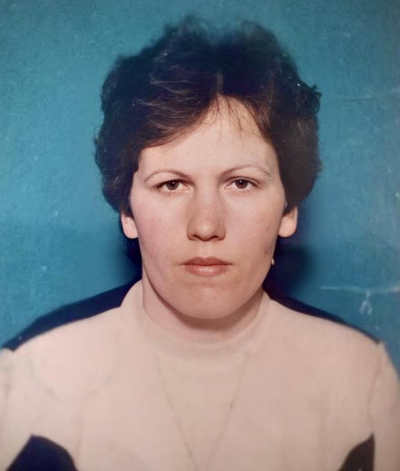
Aunt Emina, wounded on January 24, 1994, died in the morning of January 25, 1994
VIJESTI.BA: Your father arrived in the UK from the Dretelj camp. When leaving the camp and choosing the country to which he would be deported, he chose Great Britain because he wanted his children to receive a quality education. Although you planned to return to BiH, you stayed and achieved great results in your education and work…
BEŠO: My father was taken to the HVO concentration camp supported by the HV forces, more precisely to Dretelj, on July 1, 1993. That day I was playing with my friends, we saw trucks leaving Stolac. We saw a soldier on the back of a truck, we waved, they waved back, but I didn’t really understand what was going on. My sister Senada was older and quickly understood what was happening. We ran home to tell mum, and that was it – dad was gone, and it was a year before I saw him again, when we met again at Newcastle airport.
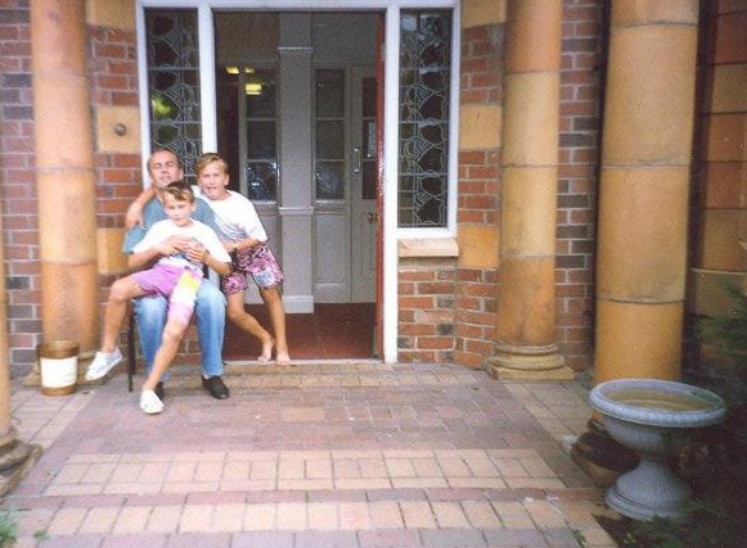
Smajo and his brother, July 1994, reunited with their father after more than a year without seeing each other (private archive)
He experienced things that no human being should experience, most if not all of my male relatives from Stolac were taken away. They were tortured and beaten daily, my father lost 26 kilos in the first few weeks. We stayed in Stolac with other women and children before being rounded up in the factory where my father worked before the war – searched, stripped of personal belongings, then loaded onto cattle trucks and driven to an area under Bosnian government control near Blagaj.
Months later we found out that my father was released for medical treatment to the coast of Croatia, to Korčula. It was only later, when we started receiving letters through the Red Cross, that we found out that he was in Great Britain. My father came to the UK on 19th January 1994, we left Bosnia on 19th June 1994 and arrived in Newcastle on 19th July 1994. He was brought here as part of a British government project in collaboration with various humanitarian agencies. I still have his plane ticket and am currently researching that process.
He almost went to the United States, but he worried that it was too far away and that it would be harder for him to come back if he did. The plan was always to return, I even have a handwritten letter he wrote in 1994 asking to be sent back to Bosnia.
He returned for the first time with my sister in 1997, but he could not come to our house in the village of Barani, Stolac, because it was not safe. I came back for the first time in 1998 with my mom and brother, we visited our village, but our house was burned, as you can see in the photos.
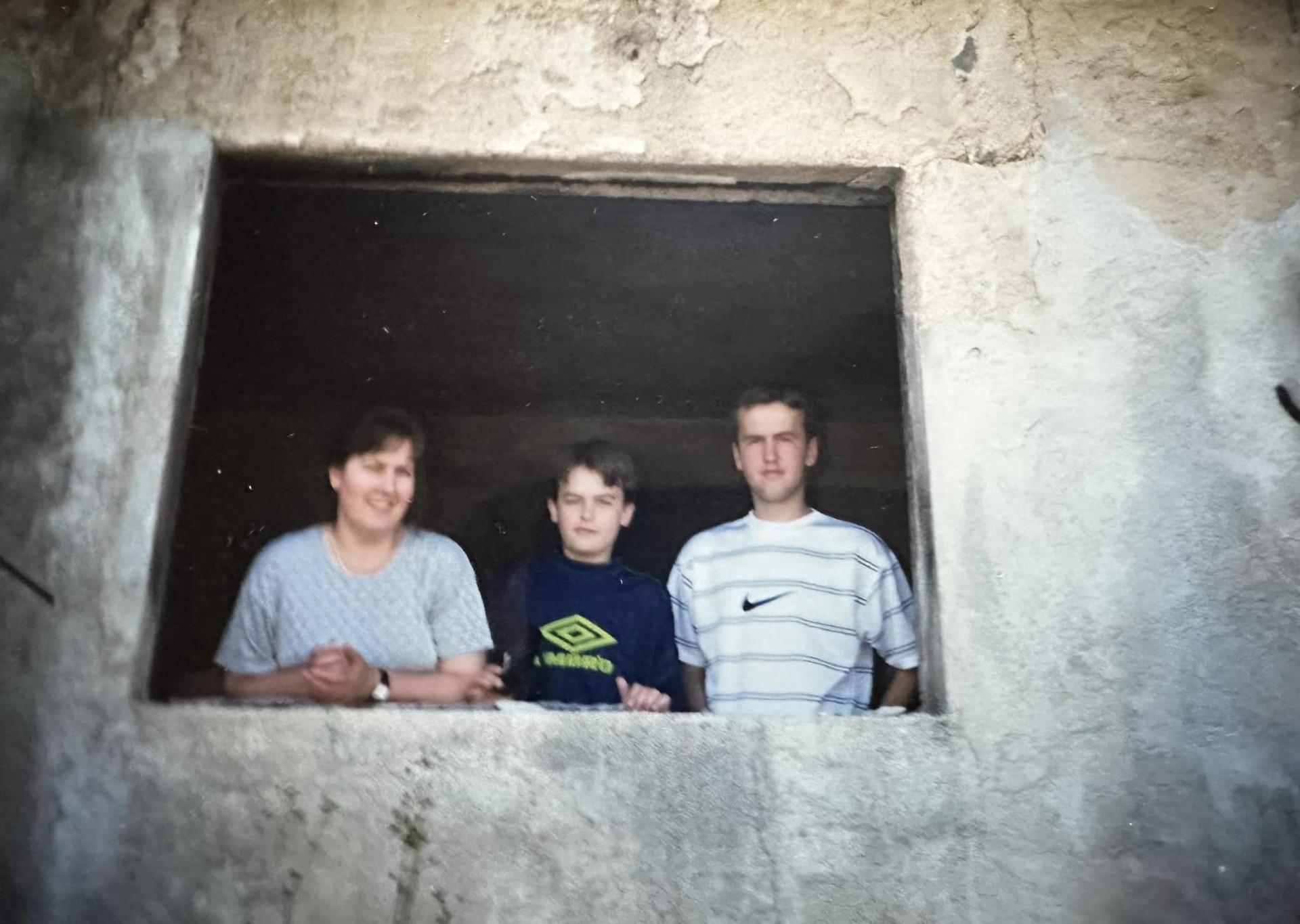
Barani, Stolac, 1998, on the remains of his home (private archive)
We realized that it would be very difficult to return. In 2002, my brother started university and we got indefinite leave to remain, which means we can stay in the UK indefinitely. I went to university, and then life happened, but Bosnia always remained in our hearts.
VIJESTI.BA: When and how did your work – education about the war and genocide in Bosnia and Herzegovina – begin?
BEŠO: I finished architecture, which takes 7 years here, and after my master’s degree, a former professor contacted me about participating in the project. I avoided her for a few years because we didn’t get along completely when I was studying. Every project and essay I did in college was related to Bosnia; it was personal and sensitive for me, and sometimes not everyone understood.
However, in the end I agreed to help, I enjoyed it and I saw that it could be a way to continue my work related to Bosnia. Now I’m grateful that she asked me to come back, because it paved the way for this business. After several years of work in practice and at the university, in 2015 I made the decision to permanently move to the university.
I now spend 50% of my time teaching architecture, urban design, and doing research, while the remaining time is dedicated to my work related to Bosnia.
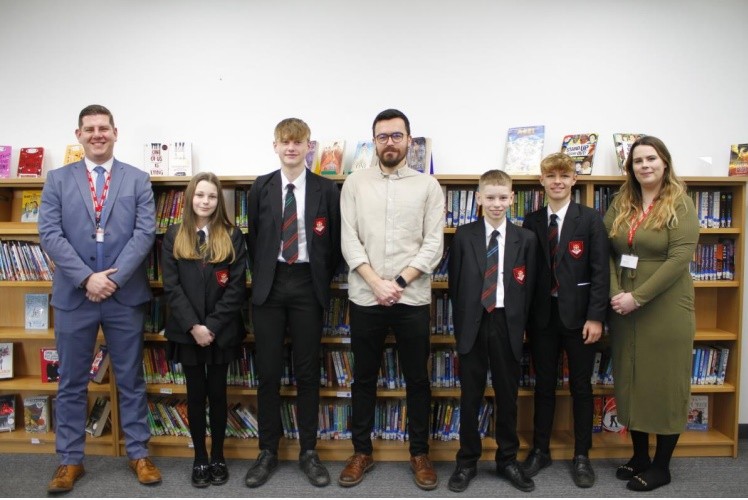
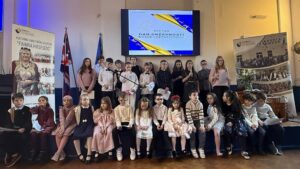
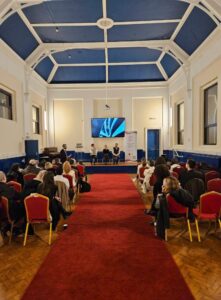
Visit to ‘English Martyrs’ Catholic School and Sixth Form College
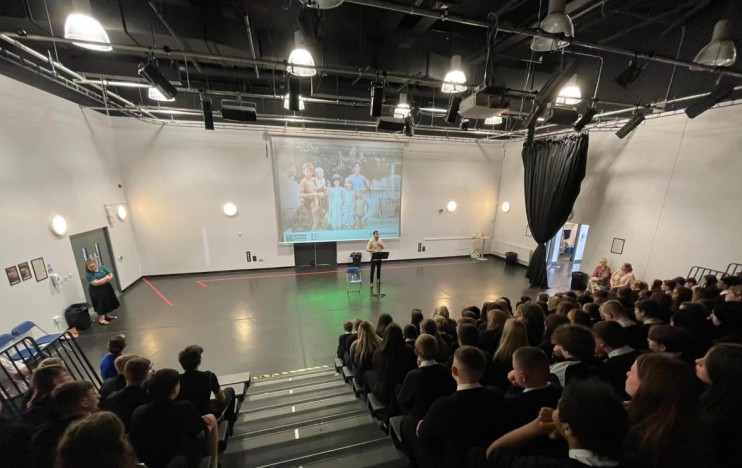
So my journey started with organizing an event, I struggled with it. I spoke, but gradually, as painful as it was to speak, it started to become more painful to remain silent. Once I started, I couldn’t stop; now I speak in schools, colleges, universities, government institutions, churches, mosques, etc. I am currently creating educational materials and programs, which is very necessary, I am spreading my influence throughout the country, I am currently working on a school project that we plan to implement in more than 250 schools across Great Britain.
Sometimes I visit schools with Holocaust survivors, the children are often shocked when they see me because I am relatively young, and they are also shocked when I start describing concentration camps, torture, genocide and the like, because they are used to seeing these things as black and white pictures, things that happened a long time ago. Bosnia is a reminder to us that we must not be satisfied, that we must not take peace for granted, that peace is not the absence of war, but something that we must work towards and maintain. The events of the last few years around the world have taught us to fail…
Political upheavals around the world, I’m worried about what it means for Bosnia
VIJESTI.BA: How do you see the situation in Bosnia and Herzegovina?
BEŠO: We are witnessing the rise of far-right parties to power across Europe, especially on anti-migrant, anti-Islamic or anti-Muslim platforms; we are witnessing a political shift that has been coming for some time, we are seeing things that might not have been acceptable 5 years ago, but are now completely normal. We are seeing political upheaval around the world and human rights violations. I am concerned about what this means for Bosnia, and unfortunately, I do not know if we have political representatives who have the vision to guide us through this.
Although I visit Bosnia regularly, I still look at the situation in Bosnia as an outsider. I can’t have the same understanding of the situation as someone who lives there, and I wouldn’t want to pretend that I do. From what I see, the situation in Bosnia is worrying; we have peace on paper, but I’m not sure if it’s real peace. I think we should ask ourselves what peace means. Peace cannot simply be the absence of war; peace must be much more than that.
How can we say that we live in peace when war criminals are openly celebrated, when there are still more than 7,000 missing persons in Bosnia, when those who killed and raped members of our families walk freely, when we have fascists who openly spread the same hatred we heard in the nineties, when we see the institutionalization of that hatred, as an example, through the construction of the museum of the Croatian Defense Council in the former concentration camp in Mostar, laying the foundations for future crimes.
Is it peace? This cannot be peace, and I fear we have been misled into believing and accepting this as such.
I don’t see Dodik’s call for secession as harmless rhetoric; I think people who say otherwise are naive. I worry about everything that’s happening in the world, that things could quickly change for the worse in Bosnia. I think those who say there can’t be another war are also very naive. For me, that’s the biggest danger and the biggest misconception – to think that it can’t happen again.
Classical warfare ended with the signing of the Dayton Agreement, and I don’t have enough space to deal with all the issues related to that peace agreement, but what is abundantly clear is that the same goals from the 1990s still exist, in many cases the same individuals are still present, only now they are using different means to achieve those goals and are largely succeeding… At least for now.
We have Croatian MEPs lobbying in Europe, trying to portray Bosnians and Bosniaks as radicals and extremists, which is causing incalculable damage to our country. Little is known about Serbian crimes in Bosnia, but almost nothing about Croatian crimes. We have fascists marching freely on our streets – for example, on January 9th in Banja Luka, what message does such a message send to the citizens of Bosnia.
Again, all these things are happening in the heart of Europe, visible to everyone, just like in the nineties. How we react to this is important. I don’t think we’re succeeding, I don’t think we’re doing enough to prevent a repeat of the nineties, and next year will show.
When I talk about the crimes committed in the name of Herceg-Bosnia and Greater Croatia, usually the reaction is the same – people are shocked that they were not taught about it or that they simply do not know. In general, we have allowed those who killed us to use the last 30 years to control the narrative of the war against Bosnia and to control how we talk about our own suffering.
VIJESTI.BA: How much do the British know about the genocide in Bosnia and Herzegovina?
BEŠO: There are people who have heard of Srebrenica, but not much more than that, but even that is slowly changing. There are also other Bosnians who are using their story to educate, and we are starting to see the impact of that.
I think that the Bosnian diaspora can play a big role here, but unfortunately, we don’t get support from the Bosnian government. We have a large diaspora around the world, an active diaspora, and I think Bosnia could do more to coordinate and support people who do work like I do. We as individuals can certainly make a difference, but together we could achieve much more.
As for the war in Bosnia and the genocide in Bosnia, little is known here; it is still partly mislabeled as a civil war, but that is slowly changing.
As for the commemoration, various ceremonies, I believe more than 1000 of them, are held all over the country every year. There are many wonderful people doing this work all over the country.
2018. In 2018, I worked with the local council in Newcastle to write a motion to recognize the genocide in Bosnia, committing to learn from it and commemorate it every year.
As part of the process, I brought a group of councilors and religious leaders to Bosnia that year. Next year, we are planting a tree and erecting a monument in the city hall grounds in honor of all those who were killed, and we are planning another trip to Bosnia. We hope to restart our annual study trips to Bosnia starting next year.
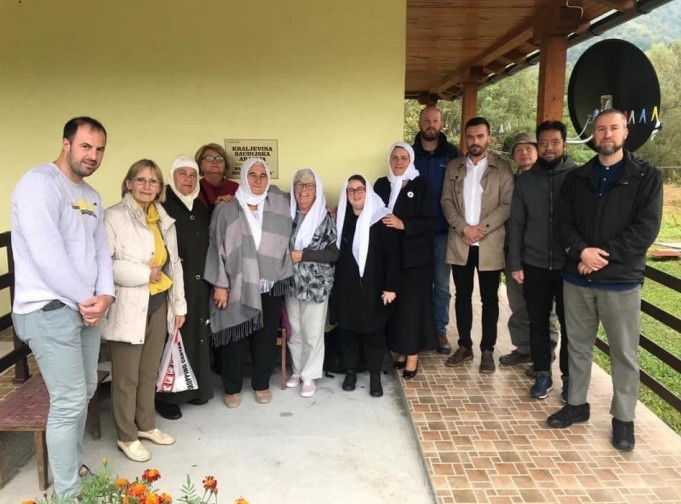
With the mothers of Srebrenica in 2018. This was their first study trip from Newcastle
VIJESTI.BA: Including the genocide in BiH in the national curriculum in the UK is the mission of your foundation. To what extent have you succeeded? It seems that you in the UK will succeed sooner than we in BiH, where genocide denial is an everyday occurrence.
BEŠO: It’s hard to be optimistic, honestly speaking. The only way for things to get better in Bosnia is to face the past. You’ve had people tell you, “We need to stop talking about the past and move on,” but how can we move on when there’s so much denial of what’s been done to us?
How can we go on when war criminals are celebrated as heroes? How can we move on while still searching for the remains of our loved ones? How can we move on when museums are being built for those who killed our loved ones – that’s not moving on, that’s burying our heads in the sand and hoping that what happened in the past won’t happen again. But if we have learned anything from the past, it is that history repeats itself for us.
I understand the situation in the education system in BiH, again from an outsider’s perspective. As long as we have a system with two schools under one roof, as long as there are schools where children are not allowed to learn in their mother tongue, as long as war criminals are presented as heroes, and many other examples like these, while we have so much discrimination and dehumanization, it is difficult to be optimistic about the future of Bosnia.
British children learn about the Holocaust and genocides
By law, children in the UK must learn about the Holocaust at school, but there is also an “imperative” to learn about other genocides such as those in Darfur, Cambodia and Bosnia. Because little is known about Bosnia, and because there are very few resources available to teachers, they tend to avoid the genocide in Bosnia, and that is what we are trying to change. So, in addition to my duties as a speaker in schools, because there is no better way to learn about it than to hear from people who have experienced it first hand, we strive to support schools and teachers with educational materials and programs.
I have partnered with one of the UK’s largest anti-racism organisations, called “Show Racism the Red Card”, to develop a five-week programme for schools based on my childhood during the war. I have already started teaching this programme in many schools, and many schools have added lessons about the Bosnian genocide to their curriculum – now I want to replicate this success on a national level.
I would say that my greatest success has come through my collaboration with the Holocaust Memorial Day Trust – the UK’s leading Holocaust education organisation. We have worked together for several years, they have given me a platform across the UK, and I believe that this collaboration with them will bring me closer to achieving my goal of adding the Bosnian genocide to the UK national curriculum.
VIJESTI.BA: The legal amendment that prohibits the denial of genocide and war crimes and the glorification of war criminals in a manner that could incite violence or hatred was imposed in July 2021 by the then High Representative Valentin Inzko. It is a law that is not being implemented. 28 years after the Dayton Peace Agreement, and more than two years after the imposition of that law, victims’ associations in BiH are forced to seek protection from the High Representative Christian Schmidt, because they do not have it from the state, to remove genocide deniers and the verdicts of international and domestic courts. What does this “Bosnian chaos” look like when viewed from the UK?
BEŠO: I welcome such a law, but unfortunately, it took 28 years to pass such a law, during which the dehumanization of Bosniaks continued. Many survivors died awaiting justice while those who killed their loved ones walked free and denied their suffering.
For the last 30 years, we have missed opportunities to strengthen our institutions that could enforce such a law. Now we have a law that cannot be enforced, which is only a continuation of our dehumanization. It is an indicator of how bad things are in Bosnia, how much we have failed the victims and survivors, how powerless and weak we are – fascists can openly deny genocide without any consequences.
VIJESTI.BA: The political and military leaders of the so-called Herceg Bosna were sentenced to a total of 111 years in prison before the Hague Tribunal for a joint criminal enterprise in which it was proven that the former Croatian state leadership also participated in the war in Bosnia and Herzegovina. You yourself are a victim of this paranormal creation. From Mostar, this year, during the celebration of the anniversary of the founding of the HZHB, they are saying that they are proud of everything that came out of it. Does that surprise you, do you expect a change?
BESO: I’m not surprised or shocked that this has been happening for 30 years. Actually, I’d be more surprised if it didn’t happen. How can we build peace with people who celebrate war criminals and paramilitary units who committed mass war crimes in Bosnia?
Celebrating such things invites a repeat of the nineties; again, the goals are the same, laying the groundwork for future justified crimes. This is the radicalization of a whole new generation of Bosnian Croats, and it only harms our Bosnian Croat friends and neighbors, while Croatian politicians constantly talk about the radicalization of Bosniaks. Our politicians are not doing enough to raise awareness in Europe about what is happening in Bosnia. I know there is definitely more that can be done here in London.
When Croatian nationalists say they are proud of Herceg-Bosnia, I would like to know what exactly they mean? Is that Dretelj? Gabela, Ahmići, the destruction of the Old Bridge? Killing innocent Muslims? What is it like to be a Bosniak, especially if you have lost a loved one, and you hear it from Croatian politicians. The message is clear, that’s why I repeat, we can build a better future only on truth and justice, and currently we are not doing a good job in that segment. This is our failure, we allow others to control our story and determine how we talk about our suffering.
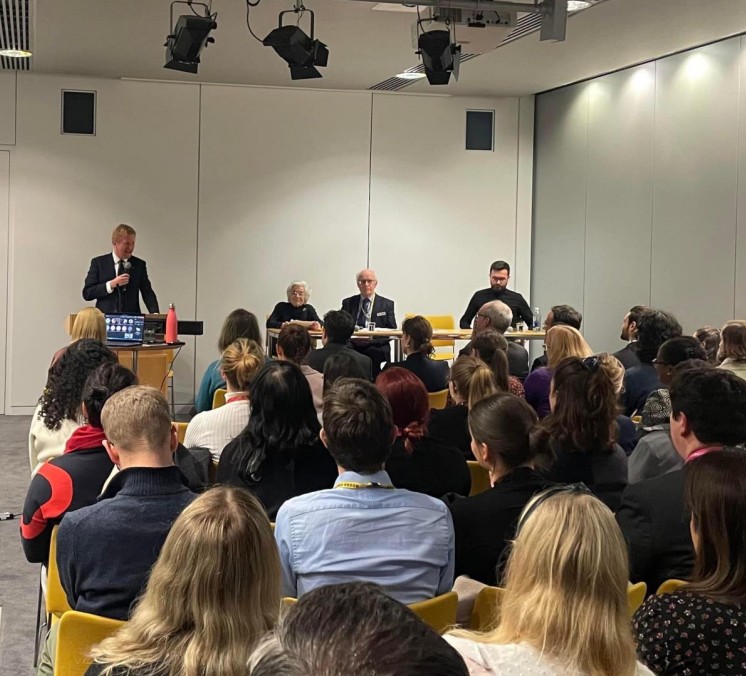
On a panel with Oliver Dowden, CBE MP, Deputy Prime Minister; Chancellor of the Duchy of Lancaster and Cabinet Minister, January 2023.
VIJESTI.BA: The systematic destruction of cultural identity and architectural heritage is a topic that you explore through lectures and research at Newcastle University, and it seems that it is still ongoing in Bosnia and Herzegovina. Not even 30 years after the demolition of the Old Bridge in Mostar, the city authorities are officially marking this sad date, on the day of the demolition you were there, a child of war. How many years have we truly moved forward since 1993? How many decades do we need to recognize the truth? How can we take a step forward when we do not learn from history?
BEŠO: Only by facing the truth about the past. The destruction of the Old Bridge was carried out by the HVO forces with the help of the HV forces, the opportunity to speak openly about it and by marking that brutal destruction, we can properly move forward and build a better future. It was a huge mistake that we did not officially mark the destruction of the Old Bridge, the symbol of the city, but it is an indication of how lost we are.
So, for something like that to happen to us, such a gruesome crime, and everything else that we experienced in Mostar, to survive all that, and then ignore all that 30 years later, is shameful. People who were capable of committing such an act, who celebrate it today, are now teaching us about European values and presenting us as radicals, that’s why commemoration is so important and that’s why this is a big failure.
This is how we defend Bosnia, with everything that is happening in the Balkans and globally, remembering the past is more important than ever . We would be fooling ourselves if we think we can build a safer and better future by remaining silent.
But this is a strategy; destroying or neglecting cultural heritage is one way in which the war and the goals of the 1990s continue against Bosnia – unfortunately, this is clearly visible, across the country.
Interviewed by: A. Bešo Mujanović
(Vijesti.ba)