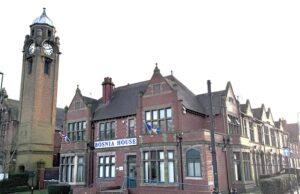

You would walk past the house on Alcester Road South, Kings Heath, and never know it was an incredible story
Neat and spacious, the house on Alcester Road South, in Birmingham’s Kings Heath district, appears to be little more than a typically sought-after suburb.
But the pre-war polo represents a piece of history that has remained a secret until now. Its past will astonish the neighbors on the quiet street.
This was the home of Yugoslav poet and Nobel Prize winner Ivo Andrić, the current owners say – the man who started World War I with his participation in the assassination of Archduke Franz Ferdinand.
And current owners John and June Hammerton, while doing independent work on the property, discovered a letter written to Andrić.
It provides, they say, the last part of the jigsaw – positive proof of Andrić’s unknown connection in Birmingham.
John, a former company director, said: “When I found the letter and started reading it, every hair on the back of my neck stood up.”
The 81-year-old was told about the fascinating history of the house by neighbors Bill and Freda Wilkes, who bought their property when it was built in 1936. They have since passed away.
In fact, John and 78-year-old June unwittingly bought it separately from Andrić’s estate – just months after the literary giant’s death in Belgrade on March 13, 1975. They paid the princely sum of £16,000.
The deeds, however, listed the owner as Ivo Andritch. The couple believe Andric Anglicized the surname in an attempt to hide his identity from the authorities.
For John, each decade revealed significant evidence.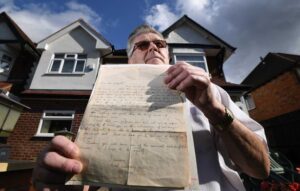
The electrical engineer said: “About twenty years ago, the world table tennis championship was held at the NEC. The doorbell rang and it was the head coach of the Yugoslavian team. His name was Zoran. He took a really good look at the house and said: ‘I played in your garden with your neighbor’s son, I spent many hours in your garden. My uncle owned this house’.”
Zoran’s uncle was Andrić. Historians have long debated the poet’s role in the assassination of Franz Ferdinand, Archduke of Austria. The royal and his wife were shot in Sarajevo on June 28, 1914, by 19-year-old Gavrilo Princip. That bloody act sparked the Great War.
Andrić was an outspoken critic of the Austro-Hungarian annexation of Bosnia and Herzegovina, where he was born.
He was a close friend of the assassin.
And the Austro-Hungarian police were so convinced that Andrić played a key role in the murder plot that they transferred him to prison.
Unable to establish a convincing case against the academic, they were forced to let him go. But Andrić remained under house arrest for most of the war.
John thoroughly researched the famous former owner of his property, who bought it in 1936.
“He seemed like a rich and generous man,” he said. “When he died, he left £10,000 to the cat house in his will – that was an awful lot of money back then.”
John discovered the hidden, sealed letter when he was removing fire protection that exposed the chimney brick. He said, “I felt that this was it, this is what I was looking for.”
It was written by a fellow academic two days before Christmas in 1914, and apparently Andrić kept it and kept it. It was accompanied by a seasonal gift of Shakespearean verse.
A handwritten note read: “Please accept this small token as a mark of respect.
“For one so great as the one I am addressing, it is difficult to choose what will forever be to him a memory of old England, without offering what is unworthy.
“To a born musician or poet, but cruelly deprived of the opportunity to display his talents to an eager world, I fear to offer / choose something less splendid than the loving music of Shakespeare’s lines.
“I trust that our professors here will not so imperfectly train you in the intricacies of our language that you will not be able to appreciate the fame of our far-famed poet. There is still time for one of his plays to be directed.”
“Believing you have one of the happiest and brightest Christmases, as I hope so myself.”
John cannot prove that Andrić lived in the estate, but the letter indicates that he was ready to come to this country.
He added: “I know that certain criteria have to be met, but, if everything is correct, they could consider placing a blue plaque on the property.” The Nobel Prize website features a detailed portrait of Andrić.
It says: “At the end of the war, he published two books of lyrical prose – one of them under the title Nemiri (Tjeskobe), 1919 – which, written in the form of a diary, reflect Andrić’s experiences from the war and his imprisonment.
“There followed a long period in which Andrić concentrated on writing short stories. His first novella Put Alija Djerzelez (The Way of Alija Djerzelez), published in 1920, early on shows the dominant feature of his creative process.
“Andrić takes his material from life in Bosnia, but through this local material he presents universal human problems. In the period between the two world wars, Andrić published three books of stories under the same title, Pripovetke (Stories), 1924, 1931, 1936.” ANDRić may be little known in this country, but in his homeland he was hailed as a hero. 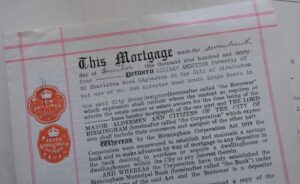
The street that runs alongside Belgrade’s New Palace, the residence of the President of Serbia, is named Andrić’s Crescent in his honor, the apartment where he spent his final years is a museum, and numerous promenades also bear his name, and in 1992 his statue was destroyed by a hammer-wielding activist.
Andrić is the only writer from the former Yugoslavia who won the Nobel Prize. And back in 1961, he was up against such heavyweights as JRR Tolkien, Robert Frost, John Steinbeck and EM Forster.
He insisted that his prize money be used to buy books from the library in Bosnia and Herzegovina.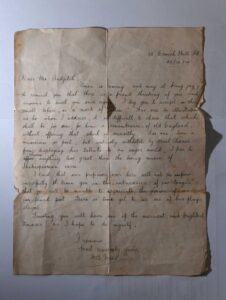
Andrić was also a powerful diplomat. 1939. He was appointed ambassador of Yugoslavia to Germany.
An opponent of the Nazi regime, he was returned to German-occupied Belgrade after Hitler’s invasion of his country in April 1941 and kept under strict surveillance.
Andrić died at the Belgrade Military Medical Academy on 13 March 1975 at the age of 82. A gathering of 10,000 people attended his funeral.
https://www.birminghammail.co.uk/news/midlands-news/quiet-birmingham-home-owned-man-19044257