
Commemorations were held in the UK to remember the victims of the Holocaust. Holocaust Remembrance Day is January 27, the anniversary of the liberation of Auschwitz-Birkenau, the largest of the Nazi death camps.
It is also an opportunity to give a gift a tribute to the victims of genocides that occurred after the Holocaust including the Srebrenica genocide, Cambodia, Rwanda and Darfur.
Although in 1945 the world unanimously said: “Never again”, genocide was repeated, and it happened right on European soil, in Bosnia and Herzegovina, less than a day’s drive from major European cities. The memory of the Holocaust is actually the memory of all the disasters that people themselves caused by killing others and others differently because of skin color, religion or political beliefs.
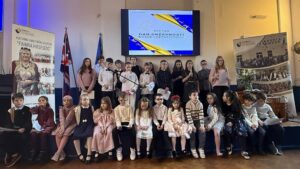
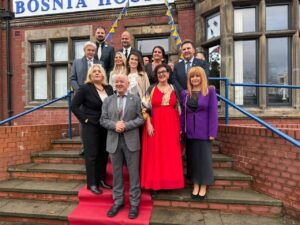
 The teaching staff of the Bosnian supplementary school in the premises of the Bosnian House Birmingham organized a workshop with students, trying to explain to them the meaning of the Holocaust, but also other genocides, with a special focus on the genocide in Srebrenica.
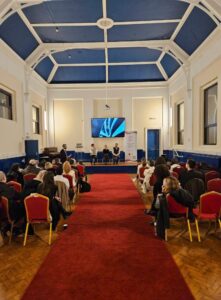
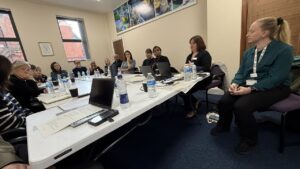
The central manifestation of the commemoration of the Holocaust in Birmingham was held in the premises of the city municipality with attendance Mayor Cllr Chaman and a large number of visitors from all walks of social and political life of this second largest city in the United Kingdom.
 This year’s program included a candle lighting ceremony, as well as a testimony from Minda Hornick MBE, who spoke about her experiences as a Holocaust survivor, as well as performances by violinist Simone Schehtman, as well as readings of poetry and prayer.

The program featured an online performance of “The White Flower” by the Sarajevo National Theatre, the Sarajevo Philharmonic Orchestra and the Opera Choir in Bosnia and Herzegovina, and the Cardiff Ardwyn Singers/Cantorion Ardwyn Caerdydd and musicians from Wales in Bosnia, created during the COVID-19 pandemic to mark the 25th anniversary of the Srebrenica genocide. The song speaks of the soul of a victim describing her mother’s pain and depicts the infamous “White Flower” that has become a symbol of the Srebrenica genocide. It is in English and Bosnian with subtitles.
Candles were lit by the Lord Mayor, Mindu Hornick MBE, Cllr Nicky Brennan, Cabinet Member for Social Justice, Community Safety and Equality and Ambassador from the Anne Frank Fund, and religious leaders.
 The Lord Mayor of Birmingham, Cllr Chaman Lal, said: “Holocaust Remembrance Day is an opportunity for everyone to pause, reflect and learn the lessons of the past and apply them today to help create a safer and better future. We come together to light a candle and remember the victims of atrocities and genocide around the world, as well as those who still sadly lose their lives in war, conflict and hate crime. As a city we must stand united against those who they want to divide and against all forms of hatred.”
BH UK Network