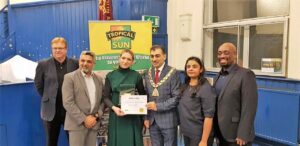
 The Bosnian-Herzegovinian British Community in London has been awarded the “Pride of Harlesden Award 2019” for its outstanding contribution to the well-being of the community in Harlesden. They are considered a key partner in an innovative model of joint work between the state and civil society sectors.
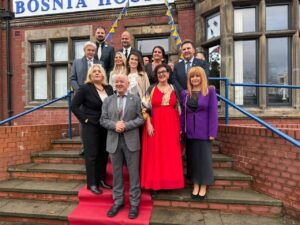
At the Salvation Army premises in Harlesden, Brent Borough, north-west London, the Bosnia and Herzegovina Advice Centre, as the only organisation from the civil society sector in the UK, was awarded the Pride of Harlesden 2019 award.
We asked the president of this organization, Mr. Zaim Pašić, where and how this recognition came from for the Bosnia and Herzegovina Counseling Center. It is certainly deserved and it came from two justified reasons;
First, as a sign of lasting gratitude to the host country. In the early 1990s, Bosnian-Herzegovinian refugees were generously welcomed by British society and given refuge when they needed it most. In addition, they gave their full support, including financial support, so that the Bosnian-Herzegovinian community could organize itself here with the aim of providing long-term support to the most vulnerable BiH communities in London. This is mainly an older population for whom the greatest obstacles to social integration are the English language and disabilities, which result in the inability to get acquainted with the system and difficulties in accessing the services of state institutions. They are also the reason why we established the Center in 1997 to provide them with advice and professional representation services in their mother tongue regarding the rights to social benefits, housing problems, social care and health services.
Over the past 22 years, the Bosnian-Herzegovinian Counseling Center has grown and developed into a highly recognized, well-known and credible counseling center that provides high-quality services. Due to our uniqueness, which stems primarily from the fact that we provide counseling services in languages (English-Bosnian-Serbian-Croatian) but also due to the lack of practical assistance in London, in 2008 we officially expanded the delivery of our services to vulnerable and marginalized Londoners from 5 more Western Balkan countries (Croatia, Kosovo, Macedonia, Montenegro and Serbia). We have secured the necessary resources to implement the services and activities that were necessary to adequately respond to the needs of the most vulnerable individuals from these communities. I can proudly and confidently say that this Bosnian-Herzegovinian Center has helped thousands of Londoners from the Western Balkans in the past two decades and improved their quality of life, and they are the best participants in the impact of our work. 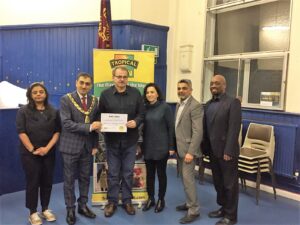
Unfortunately, they still need our help because they are still affected by past traumas and feel excluded from society. Our current work with them is focused on reducing isolation and social exclusion, promoting further independence and integration. What makes us especially happy when it comes to our users from the Western Balkans is the fact that we have gathered and brought together people who came from different sides of the conflict in the former Yugoslavia.
Others, because we are a responsible community and we want to play our role in society. Britain is going through the implementation of a very wide range of reforms to the welfare system as a result of the Act passed in 2012, which are the biggest reforms since the second world war. The impact of these reforms hit the poor in British society to a significant extent. The global recession of 2008 has caused those with less to barely make ends meet and London has become a city that the working class can no longer afford. Food banks have become a place where even nurses turn for help. We are all going through a very difficult period in our history together. Unfortunately, Brexit makes the situation in the country very uncertain and its impact cannot be estimated even by experts.
The London Borough of Brent, from which we operate, is one of the poorest in the country.
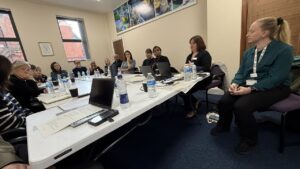
The introduction of Universal Credit, which is in fact the biggest challenge of these reforms, is expected to affect between 40,000 and 55,000 citizens of Brent Municipality. The application process is entirely online, and individuals who are less digitally capable or not at all face barriers to timely and effective application and submission. Brent Municipality, in consultation with the civil society sector to which our organisation belongs, has developed an innovative model called Brent Community Hubs to respond to the needs of its citizens in the reform process. The idea is based on providing citizens with a wide range of services that are accessible, free, efficient, and tailored to the needs of the individual. The model is designed to launch 5 Community Hubs mainly in public places such as libraries in the poorest parts of the Municipality. Each Hub would have professional staff from two sectors; government and civil society who will jointly respond to the needs of the community and act as one team offering different expertise. I am confident that, if successfully implemented, this model will be adopted by other Municipalities in the country. The first Hub was launched in a place called Harlesden, after which it was named, since it is in our immediate vicinity we immediately applied to be partners in this project. So since February 2018 we have been providing regular support to the wider local community through the delivery of advisory services, two days a week at the Harlesden Community Hub . At the end of January 2019 we gathered the results of our work and concluded that we had helped 358 people in Harlesden in the past year. During our intervention, the wider local community became better acquainted with our organization, expert team and Bosnian and Herzegovinan culture. The results of the analysis of feedback and referrals that we collected from users show that the quality of our work was rated with the highest possible rating and that the satisfaction of service users was 100%. In addition, Brent Municipality informed us that we are one of their most important partners in terms of efficiency and quality and that we are very much responsible for the success and popularity of the Harlesden Community Hub.
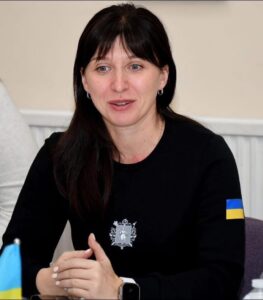
We attribute this credit to our expert team member Emina Trožić, who is in the field and who, with her hard work, knowledge, and ability, has presented the qualities, culture, and values of the Bosnian-Herzegovinian Advisory Center. Emina Trožić is originally from Sanski Most, which is located in the northwestern part of Bosnia and Herzegovina. She came to London as an 11-year-old girl, graduated with a bachelor’s and master’s degree in law from prestigious universities in the UK, and since September 2019, she has been working for a global law firm that was recognized as the best law firm in the UK in 2018. We are especially pleased that Emina will bring her knowledge of the problems of vulnerable and marginalized groups in our society to the private sector and the corporate world, and we are convinced, knowing her, that through her future work she will influence greater corporate social responsibility.
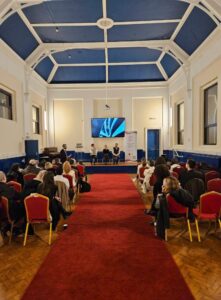
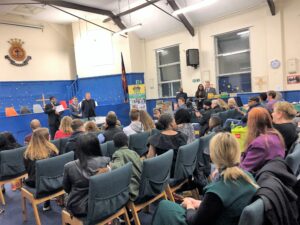 Finally, to conclude and answer your question “where did this recognition come from”; we received an invitation from the local community for a festive event on 23 February 2019 at the Salvation Army premises in Harlesden to celebrate the success of the first Community Hub in the Municipality, and we responded to it. During the event, we were pleasantly surprised when we were called to receive the 2019 Pride of Harlesden award from the Bosnian-Herzegovinian Counselling Centre for outstanding contribution and benefit to the wider local community. Being recognised for contributing to solving problems outside one’s own community demonstrates good integration of an ethnic community and sets a good example of social cohesion in society, which we believe is very important, especially now in the time of Brexit, as it prevents potential tensions in our multi-ethnic society.
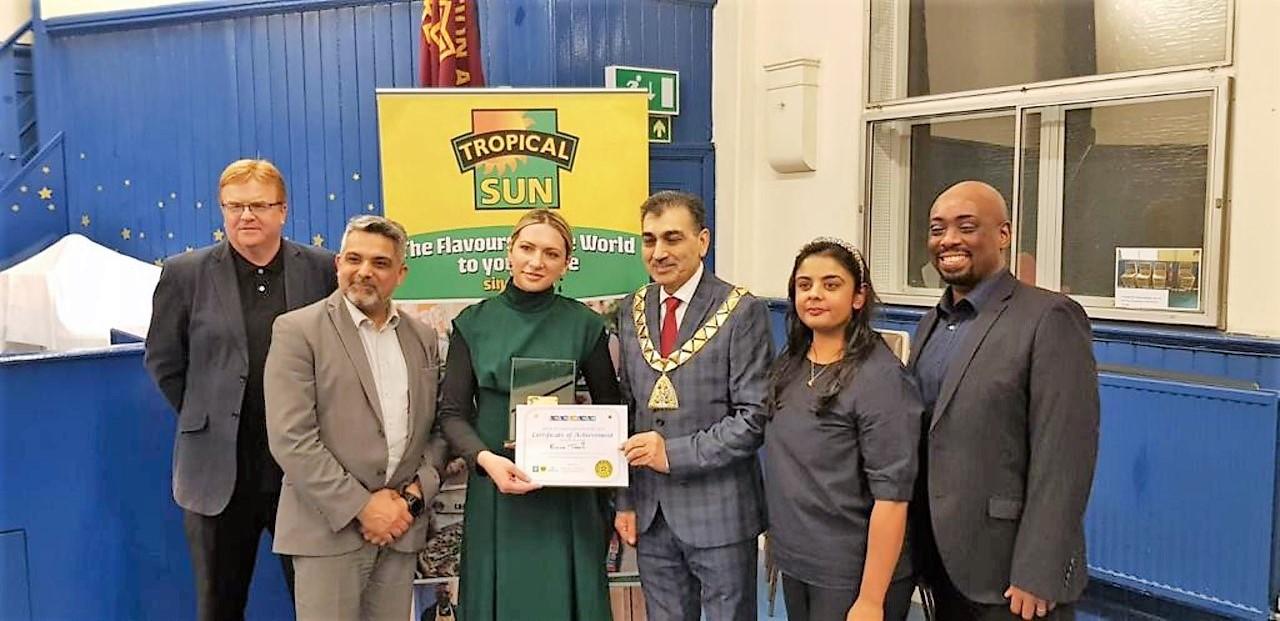
We were proud to read about our Emina, who was recognized by Brent Councillor Muhammed Butt and Mayor Cllr. Arshad Mahmood with a special award for her personal contribution and Service Excellence . With tears in my eyes I watched our Emina, our pride, the pride of Bosnia and Herzegovina in London. Our Emina moves on, in her own way and in her own way, she will continue to do what she does now but more influential and powerful, without a doubt. We remain where we are and continue to deliver advisory services and support to vulnerable and marginalized Londoners from the Western Balkans and the wider local community. Our journey to a society in which individuals and the communities we serve can thrive is quite long and not at all easy, but realistic.
The Bosnian-Herzegovinian Counseling Center has been a member of the Community of BH Associations in Great Britain (BH UK Network) since its establishment. We would like to thank our dear friends for their long-standing cooperation and congratulate all our citizens at home and abroad on the Independence Day of Bosnia and Herzegovina.