

There is so much information about the coronavirus that it can be overwhelming. We decided to summarize the most important ones and hope this collection will help you navigate.
Fact 1. Kovid-19 and SARS-KoV-2 are not the same thing. Covid-19 is a disease (“d” stands for “disease”) caused by a new corona virus. SARS-KoV-2 is the name of the virus itself.
Fact 2. CoV is an abbreviation for CoronaVirus – corona virus. It is the name of a family of viruses (there are about 40 of them in total), which resemble a crown due to their spiky appendages.
Fact 3. Coronaviruses are invaders of biology. The tip of each spike “mimics” a molecule of a useful substance, so that cell receptors gladly draw it in. Together with the spike, the virus enters the cell. This is how infection occurs.
Fact 4. The term “novel coronavirus” (or nCoV) means that the virus is new not only to scientists, but also to our cells.
Fact 5. Over two million years of evolution, our immune system has learned to deal with most known infections, but the new coronavirus is a real surprise – that’s why it’s so hard to deal with the virus, and so easy to get infected.
Fact 6. Once inside the cell, the virus “takes over” control of it and forces it to endlessly produce its own copies instead of the usual proteins. Thus begins a chain reaction. Eventually the cell dies, and the carrier of the infection becomes contagious.
Fact 7. In the initial phase of infection, the novel coronavirus actively multiplies in the throat and upper respiratory tract. The infection then travels down and can reach the lungs, causing inflammation.
Fact 8. This is exactly why a cough is the first symptom of an infection. The temperature starts to rise only later.
Fact 9. Or it doesn’t start to rise – 30 percent of patients in Wuhan did not have a fever when they arrived at the hospital.
Fact 10. Many people who become infected (18 percent, i.e. almost one in five) do not even have a cough. The disease passes without any symptoms – a person may not even suspect that he is sick.
Fact 11. However, asymptomatic patients are still active carriers of the infection and can infect others.
Fact 12. Symptoms of the mild form of Covid-19 are very similar to the usual seasonal flu: dry cough, fever, general weakness, sometimes muscle pain or headache.
Fact 13. The milder form is treated in the same way as the common flu – at home, depending on the symptoms.
Fact 14. One of the most unusual symptoms of coronavirus is the loss of the sense of taste and/or smell.
Fact 15. This symptom is not found in all patients, but it can occur as the only symptom of infection.
Fact 16. So, if you suddenly lose your sense of smell or taste, it’s a sign that you need to be careful and take action.
Fact 17. Important: a carrier of the new coronavirus becomes dangerous to others immediately after infection – long before the disease develops and before the first symptoms appear.
Fact 18. The good news: the more dangerous and deadly a virus is, the harder it is to spread. Once it kills its host, the virus can no longer infect others. That’s why the virus rarely mutates into more deadly forms – it doesn’t do it any favors.
Fact 19. Bad news: This is SARS-CoV-2 – just from a different category. This virus turns its host into someone who spreads the infection, but it doesn’t show up right away or at all. So the carrier manages to infect a few more people.
Fact 20. On average, each carrier of the novel coronavirus manages to infect 2 to 4 healthy people. This is a higher number than the seasonal flu (1.3), but lower than the number of measles (12+).
Fact 21. Although, like any infection, the coronavirus also has so-called super-carriers – carriers who infect incomparably more people: hundreds or even thousands.
Fact 22. In South Korea, the virus was under control until the number of cases reached 30. But a woman codenamed “Patient 31” infected about 1,200 people.
Fact 23. It turned out that she was very religious and continued to go to church, despite her cough and fever, ignoring the recommendations of the Korean authorities.
Fact 24. In 10 days, the number of infected in South Korea rose from 30 to 5,000.
 Fact 25. The mortality rate from Covid-19 is still difficult to calculate accurately, but most studies estimate it to be between one and three percent.
Fact 26 . This is about 20 times more than the seasonal flu, but it is nowhere near as high as the previous corona viruses – SARS (10%) and MERS (25%).
Fact 27. The mortality rate from Covid-19 largely depends on the overall burden on the healthcare system and the speed of care: in Germany it is only 0.3 percent, and in Italy it is almost 9 percent.
Fact 28 . Among those older than 70, the mortality rate exceeds 5 percent, among those older than 80, one in ten dies.
Fact 29. That is why the main task of governments around the world is now to prolong the epidemic for as long as possible, without allowing a large number of people to become ill at the same time.
Fact 30 . The pandemic is developing rapidly: from the first case, the number of patients reached 100,000 in 67 days, while the next 100,000 fell ill in 11 days, and the third in four days.
Fact 31. Every day, the number of infected increases by about a third.
Fact 32. The pandemic has spread to the most remote corners of the world, including the famous Easter Islands, where the first patient, a 42-year-old man, was officially confirmed on Tuesday, March 24.
Fact 33. Experts warn: you need to psychologically prepare yourself for the fact that the number of infected people may reach tens of millions, and the number of dead – perhaps hundreds of thousands.
Fact 34. It is not known exactly where SARS-KoV-2 originated, but bats and pangolins are known to carry similar viruses.
Fact 35. The virus most likely mutated and was transmitted to another animal, and from there to humans.
Fact 36. Was the virus dangerous to humans at the time the first person was infected? Or did it mutate and learn to penetrate our cells once it was already inside humans? Scientists have not yet found answers to these questions.
Fact 37. If the virus was already dangerous when it came into contact with humans, it means that it may still be somewhere in the animal kingdom, so sooner or later it can infect humans again.
Fact 38. Because of this, at the beginning of the epidemic in Wuhan, markets where wild animals were sold were immediately closed.

Fact 39. This, by the way, is a standard measure in China in such cases – markets are closed when a new infection is suspected and quarantine is imposed. It usually works, but this time it was too late: the asymptomatic virus had already reached people.
Fact 40. No, the virus did not escape from a biology lab, no matter how much one might want to believe that.
Fact 41. Several scientific teams from different countries have simultaneously examined in detail the version of the artificial origin of the coronavirus and rejected it as unfounded.
Fact 42. “Our analysis clearly shows that SARS-CoV-2 was not made in a laboratory and has not been deliberately manipulated,” the researchers write in the scientific journal Nature .
Fact 43. While we’re on the subject of myths, here’s another one: surgical masks do NOT protect against coronavirus. Its particles are so small that they easily pass through pores.
Fact 44. Here, to help you imagine the size of the virus: about 100 million copies can easily fit on the head of a pin.
Fact 45. An infected patient’s coughing disperses very small droplets of saliva, each of which can contain billions (!) of viral particles.
Fact 46. It makes sense to wear a mask for those who are afraid of infecting others – it does not provide 100% protection, but it somewhat reduces the risk to others.
Fact 47. Contrary to popular belief, pets CANNOT spread the corona virus. No cases of human infection from a dog or cat have yet been recorded.
Fact 48. However, the virus can be picked up in a completely empty room, where the infected person previously stayed.
Fact 49. The coronavirus survives in the air (i.e. can infect healthy people) for three hours.
Fact 50. SARS-CoV-2 remains dangerous on plastic and steel surfaces for up to three days, on paper and cardboard – up to one day, on copper – up to four hours.
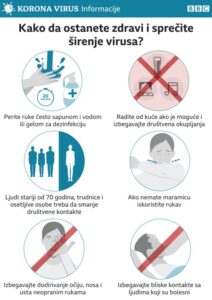
Fact 51. That’s why the main and most reliable means of prevention is thorough hand washing after contact with any surface outside your home.
Fact 52. You can look up how to properly wash your hands online (no, this is not as obvious as you might think).
Fact 53. If you happen to have nowhere nearby to wash your hands, you can use an antiseptic hand gel. But it’s better to wash your hands.
Fact 54. You can make an antiseptic at home, but you will need medical alcohol.
Fact 55. In extreme cases, you can disinfect with Miramistin or Chlorhexidine – they destroy not only bacteria, but also viruses.
Fact 56. Antibiotics are useless against the corona virus, just like against any other virus, including the flu or herpes.
Fact 57. Quarantine and other restrictive measures around the world may continue (with short breaks) until a vaccine or effective therapy for Covid-19 is found.
Fact 58. An effective vaccine against the coronavirus will certainly NOT appear in less than a year and a half, until mid-2021. By that time, most people at risk of the virus are likely to have become ill.
Fact 59. A vaccine may never be found. For 35 years, the whole world has been trying to develop a vaccine against HIV, so far without success. However, there are “HIV pills” that provide effective prevention.
Fact 60. There is no specific therapy for SARS-KoV-2 yet. Patients are treated exclusively symptomatically, i.e. the disease itself is not treated, but the symptoms are treated.
Fact 61. More than 100,000 people who were confirmed to have Covid-19 have successfully recovered.
Fact 62. Most patients (more than 80 percent) did not require any medical attention at all. They were treated at home with the same medications as for the common flu and recovered in about a week.
Fact 63. Hospitalization is required for about one in five or six people who become ill – these are mostly the elderly and/or those who already have a chronic illness.
Fact 64. In severe cases (about 4 percent), the patient must be connected to a ventilator. There may not be enough if too many people get sick. Some car manufacturers have switched to producing respirators.
Fact 65. This is precisely one of the main causes of high mortality in Italy. There are a lot of elderly patients, hospitals are overburdened, and staff are overworked, while there is not enough equipment.
Fact 66. For every 10,300 Italians who have recovered from Covid-19, there are 8,000 deaths. According to data for March 31, 75,528 people are still sick in Italy.
Fact 67. In parallel, a cure is being sought. There is no time to develop new drugs, and doctors are testing existing antiviral drugs and their effectiveness in the fight against SARS-KoV-2.
Fact 68. In February, Chinese doctors noticed that chloroquine, a drug designed to prevent and treat malaria, was showing good results. Since then, several studies have confirmed its effectiveness in fighting Covid-19.
Fact 69. Two potential drugs are lopinavir, which is commonly used to treat HIV, and remdesivir, which was originally developed to treat Ebola-Marburg fever. Both are showing good results in trials so far.
Fact 70. The latest promising discovery is the antiviral Avigan (Favipiravir), a popular anti-flu drug in Japan. It is specifically designed to fight RNA viruses.
Fact 71. In tests conducted in Wuhan, coronavirus patients who received Avigan recovered in an average of four days.
Fact 72. Almost all patients in China used traditional Chinese medicine (TCM) preparations in addition to conventional medications.
Fact 73. The TCM formula, which was developed at the Eighth People’s Hospital of Guangzhou Province, has been approved by the Ministry of Science and Technology of Guangdong Province and has also received official approval from regional authorities.
Fact 74. According to a report by China’s national news agency Xinghua, Covid-19 patients are recovering particularly effectively from the combination of the traditional medicine Kingfei paidu with mainstream therapy.
Fact 75. This traditional medicine is made from herbs and other plants, among which are the gymnosperm and licorice root. There are dozens, if not hundreds, of recipes for this tincture.
Fact 76. They sometimes try to save seriously ill patients by transfusing recovered blood plasma, which contains antibodies against the virus. This practice has proven successful during the SARS, MERS and Ebola virus epidemics – and is officially recommended by the World Health Organization.
Fact 77. Sneezing is NOT a symptom of the corona virus. Cough – yes, sneeze – no
 Fact 78. SARS-CoV-2 continues to mutate. From December to March, some variants of the virus have changed their genome 14 times.
Fact 79. In total, there are already more than 1,200 genetic modifications of the virus, with slight differences.
Fact 80. Genetic differences help scientists map the spread of the virus.
Fact 81. There is no evidence that Covid-19 can be transmitted through food, while cooking at high temperatures kills the virus.
Fact 82. However, if you want to take food to someone, and you don’t have symptoms of the virus, make sure you wash your hands thoroughly with soap and water before you start cooking.
Fact 83. Although the chances of contracting the corona virus through food are small, it still exists. For example, eating utensils are probably more of a risk than the food itself – be sure to clean it if you receive such a gift.
Fact 84. And if you bring someone cooked food or a cake, be sure to stay at least two meters away from everyone, including your loved ones.
Fact 85. According to current knowledge about the transmission of the infection, the virus has not been observed to be transmitted sexually. However, sexual relations involve intimate contact, kissing and touching, which are ways of transmitting this virus.
Fact 86. If your partner has symptoms or is suspected, it is necessary to isolate and avoid close contact. During the pandemic, sexual relations with strangers should be avoided in particular.
Fact 87. The Chinese first discovered an early form of vaccination in the 10th century: “variolation” involved exposing healthy people to sores and scabs caused by the disease in order to build immunity.
Fact 88. At least twenty possible vaccines against the Sars-KoV-2 virus are currently being worked on in the world.
Fact 89. The first human testing of the vaccine was conducted in the United States in March, without prior animal testing.
Fact 90. However, Australia’s Commonwealth Scientific and Industrial Research Organisation (CSIRO) says the tests they are working on will be the first comprehensive pre-clinical testing of vaccines on animals.
Fact 91. In recent days, a team of scientists from Australia have given the vaccine to African ferrets – small, furry mammals that have been shown to be able to contract the coronavirus in the same way as humans.
Fact 92. CSIRO is testing two variants of the vaccine. The first is a vector-based one, which uses a “defective” virus to deliver coronavirus proteins into the body and thus trigger an immune response.
Fact 93. Another variant of the vaccine is designed to insert certain viral proteins and thus encourage cells to produce this protein themselves before the immune system reacts to them.
Fact 94. The first results of animal trials could be expected as early as June, and if successful, clinical trials of these vaccines could begin in other laboratories. However, it will take at least 18 months to complete all regulatory tests.