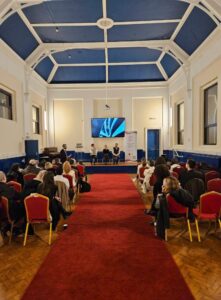
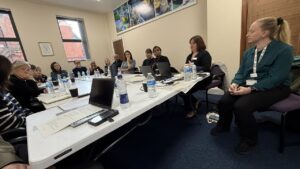
The theme for this year’s Srebrenica Genocide Remembrance Week was announced today in the British House of Lords. Every year Remembering Srebrenica chooses a theme that reflects an aspect of genocide that must be commemorated, but also speaks to communities here in the UK. The theme will be marked by numerous commemorations that will be held throughout the country in local communities, schools and municipalities during the Srebrenica Genocide Remembrance Week, which will last from Monday, July 4 to Monday, July 11, 2022.
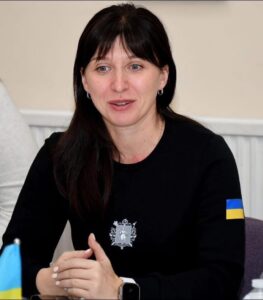
 The topic was announced by Alicia Kearns MP , Chairwoman of the All-Party Parliamentary Group for Bosnia and Herzegovina. The theme for this year’s commemoration of the 27th anniversary of the Srebrenica genocide is ” Combatting Denial: Challenging Hatred”.
Despite the fact that genocide was committed in Bosnia, denial of this crime remains prevalent, and the failure to confront the reality of the past has led to more pain and suffering for survivors of the genocide. Denial is a significant obstacle to peace and reconciliation (which can never be achieved without recognition), increases hatred and division, and contributes to the glorification of perpetrators.
The goal of this year’s theme is to provide individuals with a better understanding of the harmful impact that denial can have if we allow others to spread falsehoods, and to empower them to fight denial and confront hatred in order to create a more cohesive and prejudice-free society.
 Individuals and institutions at the highest levels deny the genocide and war crimes committed throughout Bosnia and Herzegovina from 1992 to 1995, including the mayor of Srebrenica, the current political leadership of Republika Srpska, and neighboring countries such as Serbia and Russia, which vetoed a 2015 UN resolution to condemn the Srebrenica killings as genocide. While such denial and historical revisionism began immediately after the war, institutional and political denial of genocide has become widespread in the last decade and a half and is alarmingly part of mainstream discourse in parts of the Balkans and has been allowed to flourish without any consequences or sanctions imposed in response.
 Other speakers at the unveiling of this year’s theme were: Lord Bourne of Aberystwyth, Chair of Remembering Srebrenica and former Minister for Religions in the UK Government; Yasmin Qureshi MP, Chair of the All-Party Parliamentary Group on Srebrenica; Rt Hon. Ian Blackford MP , Leader of the Scottish National Party in the House of Commons; Fleur Anderson MP, Co-Chair of the All-Party Parliamentary Group on the Prevention of Genocide and Crimes against Humanity; Colonel Bob Stewart MP DSO, former United Nations Commander of British Forces in Bosnia; Safet Vukalić BEM , a genocide survivor from Prijedor; His Excellency Vanja Filipović , Ambassador of Bosnia and Herzegovina to the UK and former student of the BiH Supplementary School Birmingham .
 Lord Bourne of Aberystwyth, President of “Remembering Srebrenica”, in his address reflected on the achievements of this organization since its founding in 2013. Over 180,000 young people have been organized and educated, and 1,450 community champions are dedicated to organizing memorial activities and social action projects to raise awareness of the importance of rejecting hatred and promoting community cohesion.
 In his closing speech, Dr. Azmi Waqar, founder of Remembering Srebrenica, thanked everyone who came and supported this event. “We are proud that our country is the world’s largest commemorator of local Srebrenica memorial activities, organised through eight English regional committees and three committees in Scotland, Wales and Northern Ireland, and 1,450 local communities, to honour the victims and survivors of the genocide and to educate people about the dangers of hatred and the importance of building more cohesive communities for all. We hope that this year’s theme will not only seek to bring people together to learn the lessons of the past with the aim of creating a stronger, more inclusive community, but also to inspire future generations to challenge denial and the incitement of hatred and intolerance.”
He thanked the organization’s team for their efforts and dedication, and the British government, without whose support and financial assistance the work of the Remembering Srebrenica organization would not be possible.
 “The Srebrenica genocide is the worst crime on European soil since World War II, in which more than 8,000 Muslims were systematically killed in the town of Srebrenica in Bosnia alone, simply because of their Muslim identity. Nearly 100,000 Muslims were killed across the country, more than 2.2 million people were displaced, and between 20,000 and 50,000 women were raped as part of a systematic campaign of ethnic cleansing and genocide carried out by Serbian forces,” the charity “Remembering Srebrenica” said in a statement.
 The second generation of survivors in Great Britain took part in the program: Nejra Gazibegović, Amina Mekić, Emina Bolić, Hana Cerić and Selma Bektić . They made sure to be on hand for the guests at all times and helped organize the event with their presence. They recited the Srebrenica prayer. The event was also attended by Mujo Delić , who survived the genocide in Srebrenica and is a member of the organization “Survivors of the Genocide of July 11, 1995. SREBRENICA.” After 27 years, he still says: Put an end to the denial of genocide.
BH UK Network